
Before the snow flies, take a walking tour of several historic homes on and near Center Avenue
Take a walk through one neighborhood near Center Avenue and you'll learn about local history and architecture.
The Center Avenue Historic District and touring its seemingly endless rows of homes both along Center Avenue and the surrounding neighborhoods is a fascinating way to spend a few hours on a sunny day. Along the way, you’ll learn about architecture and local history.
This fall, Route is taking you back to the leaf-covered sidewalks and streets of the district for a third time to admire more historic architecture and learn local history.
In 2020 and 2021, Route Bay City has offered our readers several historic architecture walking tours. In November 2020, Route Bay City detailed our first self-guided walking tour of the Center Avenue district. That route lines up perfectly with our May 2021 tour of another section of Center Avenue. Cross the river and you can stroll through the historic Midland Street district in a tour outlined in December 2020.
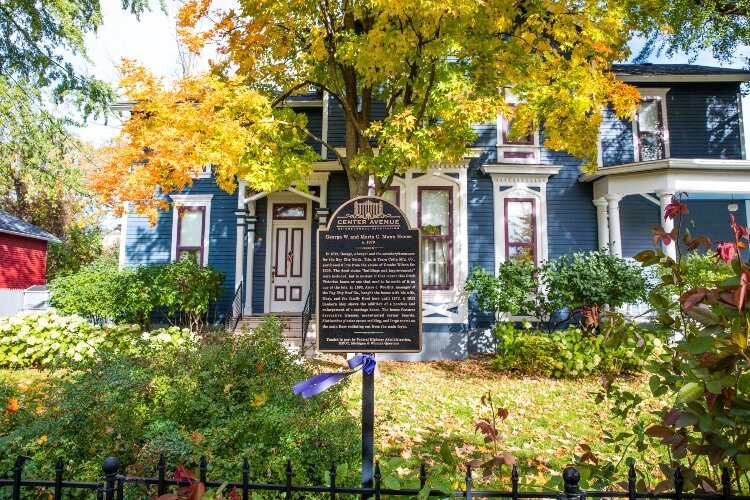
- 701 N. Grant St., the George W. and Maria C. Mann House
Toward the western end of the Historic District sits the George W. and Maria C. Mann House at 710 N. Grant St.
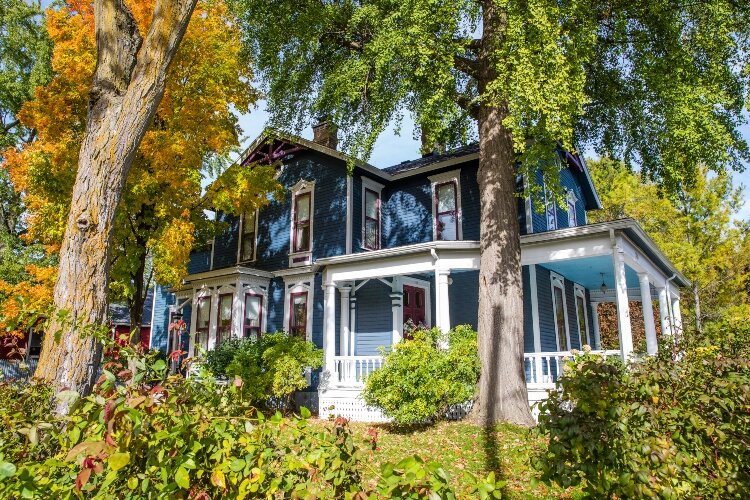
George Mann worked as a lawyer and secretary for the Bay City Brick, Tile, & Terra Cotta Manufacturing Co. in 1879. He purchased this lot for $300, and had this house built in 1882. In 1892, the home changed owners to Amos J. Woolfitt of the Bay City Beef Company. Amos, and his wife, Mary, were the first of four generations of the Woolfitt family to live in the home for 80 years, ending in 1972.
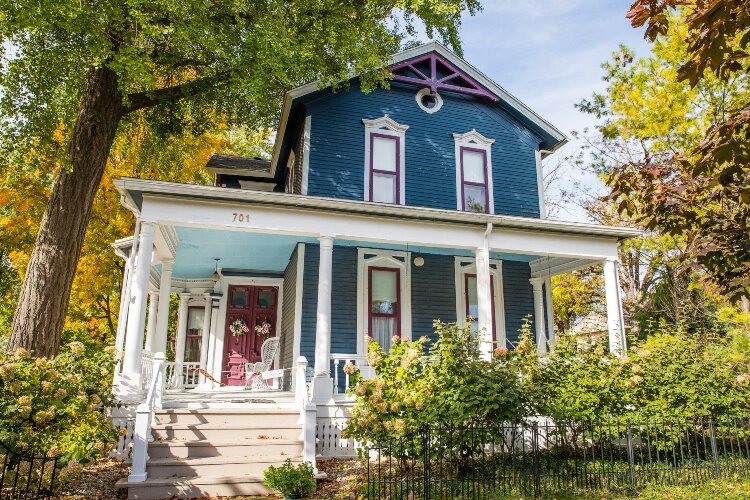
The Stick Victorian house features characteristic plaster crown molding, ornamental trusses, and emphasized corner boards. Inside, the main floor features spacious rooms radiating from the foyer. The home also has a two-story cross gable with a single-story porch. The porch’s column supports and turned spindle balustrade wrap around the southeast corner of the home. The gables feature decorative trusses. The home’s sash windows feature sills and peaked crowns. Bay windows face south. The second story entrance features a stoop on the southern elevation.
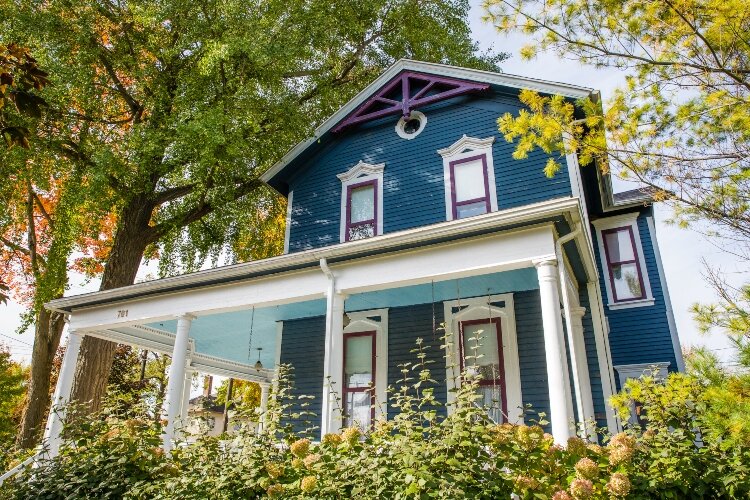
Stick Style architecture saw peak popularity between the 1860s and 1890s. Decorative wooden trim was applied to the exterior to draw attention away from the basic wooden frame of the house. Few remain in urban areas, and we are lucky in Bay City to see examples of it.
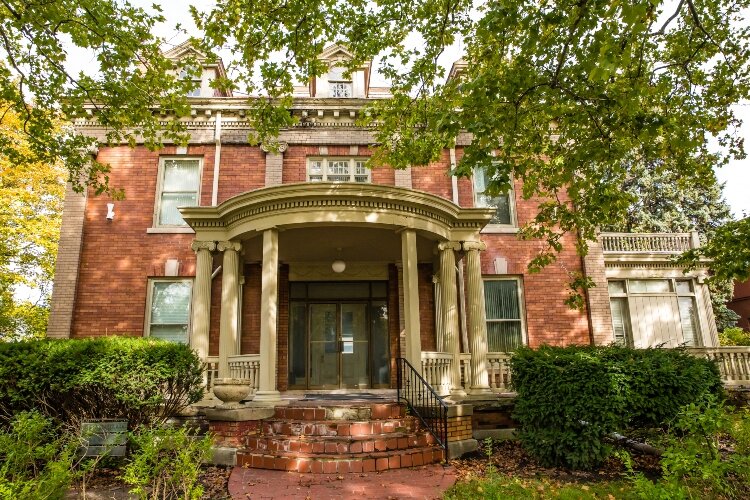
- 1001 Center Ave., the Dr. Virgil A. and Mary (Cranage) Tupper House
This 2 ½ story stone and brick Georgian Revival home was designed by local architects, Clark and Munger. Clark and Munger are also responsible for The Bay City Times Building at 311 Fifth St. and the Alpena City Hill.
Thomas and Julia Pitts Cranage built it in 1906 as a wedding present for their daughter and son-in-law, Mary and Virgil Tupper. Thomas Cranage was a very successful Bay City entrepreneur and owned Pitts and Cranage, manufacturers of lumber and salt. He also served as the President of the Michigan Salt Company, Vice President of First National Bank, and President of the Bay County Savings Bank. Thomas Cranage, along with E.Y. Williams and N.B. Bradley, formed the Michigan Sugar Company in 1897.
Virgil Tupper was a surgeon and general practitioner who was also a founder of Mercy Hospital, now the Bradley House at 100 15th St.
Virgil is remembered for the groundbreaking surgical practices he brought to town. A Pennsylvania native, he spent most of his childhood in Bay City with his uncle, Dr. Horace Tupper.

Inspired by his uncle, he devoted his practice exclusively to surgery and dedicated his life to learning new techniques in Europe. It is noted that he was the first in Michigan to perform an appendectomy, use a gas anesthesia, and a bone graft. Tupper was a member of the American Medical Association and the Michigan State Medical Society, and served as president of the Bay County Medical Society.
He married in 1901 to Mary Cranage, daughter of Thomas.
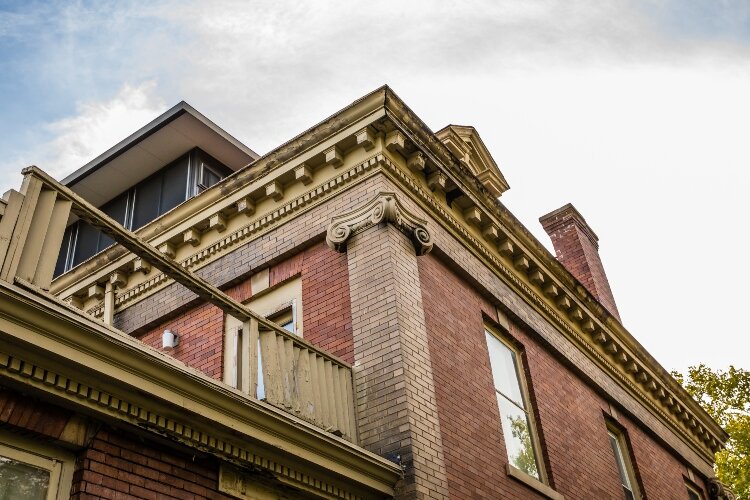
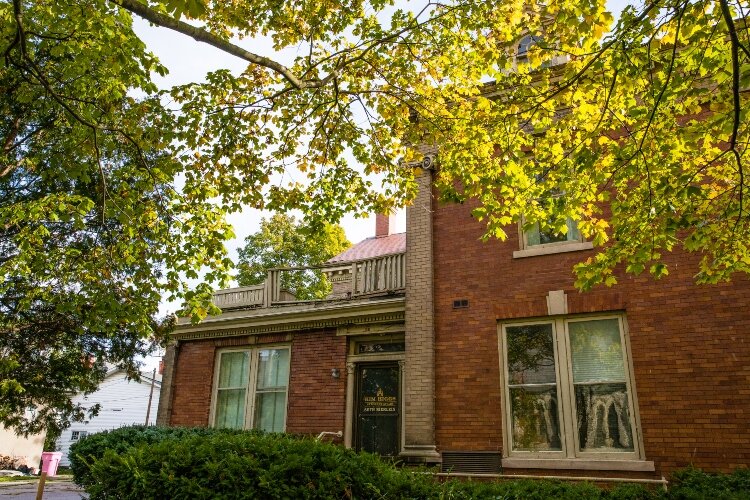
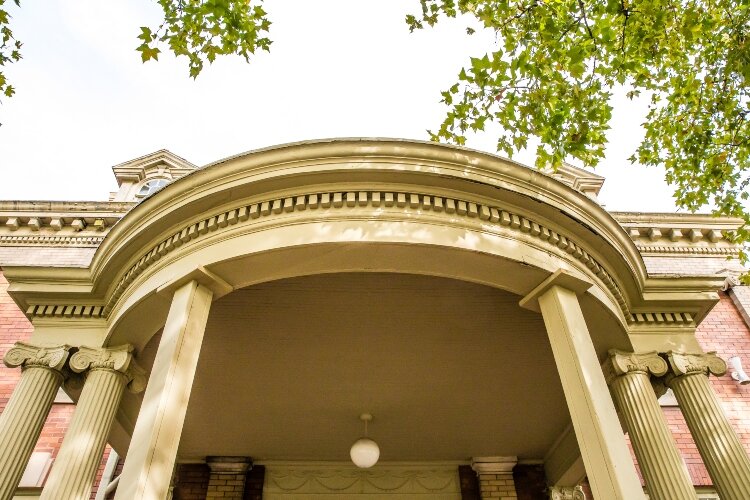
The home’s centrally located entrance features a portico and terrace made of red quarry. It is adjoined by grooved columns around the front door. At the corners of the building, the brick columns are topped by limestone scrolls. A striking feature of the home are the cornice’s dental moldings.
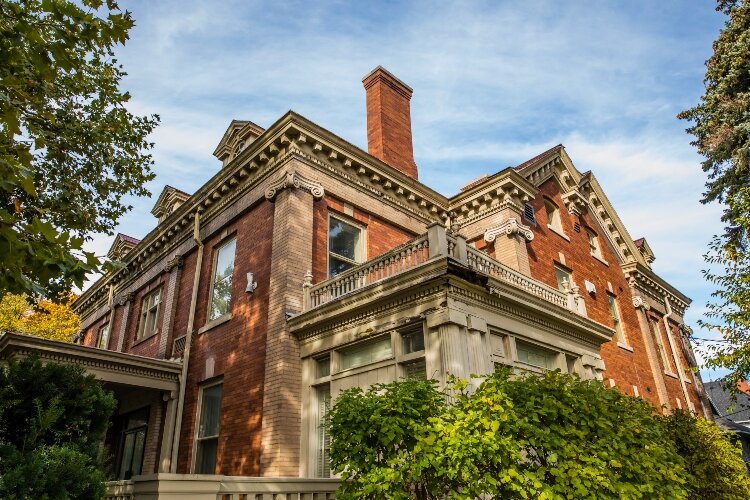
The home also features a deck roof and brick pilasters with unique capitals dividing the facade into three bays. Sash windows are featured in the home with keystone lintels lining the porch.
The home was converted to office spaces in 1964 by Peter B. Franz — one of the earliest in Bay City to promote and preserve historic homes in Saginaw and Bay City.
Georgian Revival originated from the colonial architecture of the Atlantic seaboard and during the reign of the four King Georges of England between 1714 and 1830. In the 1870s, it re-emerged and between 1900 and 1910 it was one of the most popular revival styles of architecture.
- 1701 Center Ave., the Grant H. & Anna R. Piggott House
This home gives off a little more Bay City history as it is one of the homes built by the town’s own Lewis-Built Homes. Bay City was once known the world over as the capital of pre-fab or mail order homes. Lewis-Built homes operated in Bay City between 1913 and 1973.
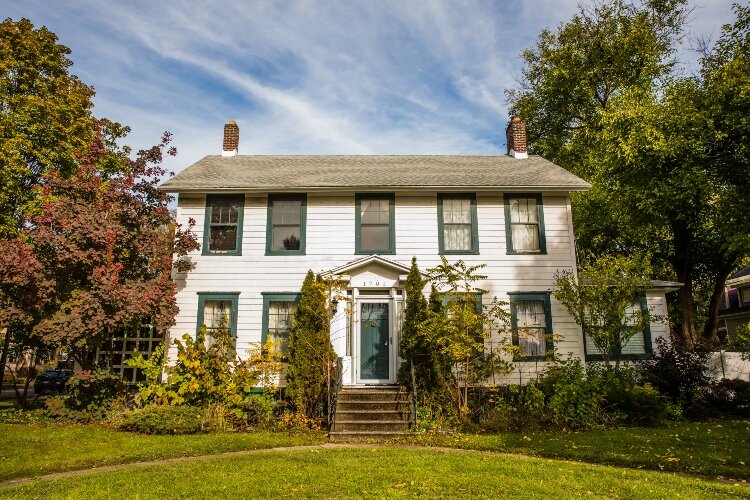
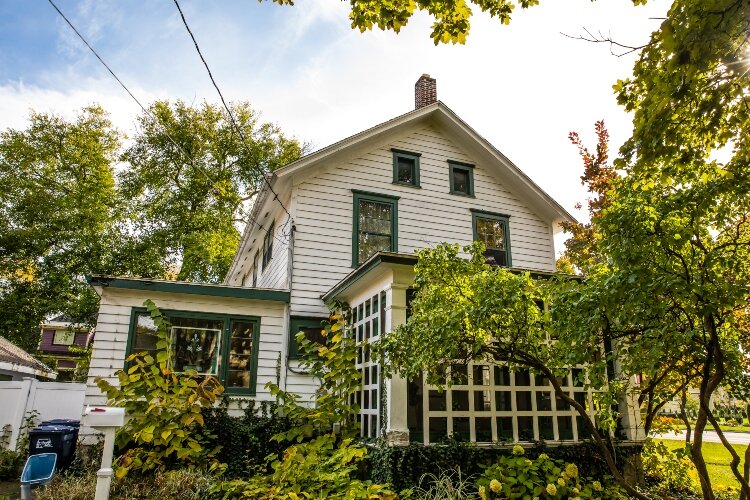
This home, built in 1913, known as “The Lenox” model, is a two-story colonial-revival. The symmetrical faced is formed by the side-gable roofs, single story wings, and brick interior chimneys. In 1917, the catalog price was $1,859.06—shutters and wooden interior designs costing extra.
The home’s centrally located entrance opens to a central hall lined by a stairway. It also features a transom, side lights, pilasters, and pediments. There is an addition to the home in the rear.
Grant Piggott, originally from Ontario, Canada, served as Vice President of Piggott Brothers, which was a houseware company located at 1009-13 Water St. It was here that the Piggott family erected their own business block and saw it expand to five stories.
This colonial revival home is reminiscent of the style made popular in New England; it is one of the most popular architectural styles in the U.S. and emerged in the late 19th Century during a fascination with the English and Dutch styles of the colonial period. It was popular right up to the post-World War II era.
Lewis Manufacturing was founded in Bay City in 1896 by Adna Lewis, who previously worked as a bookkeeper for Miller & Lewis, a lumber and salt manufacturer in town. His company, Lewis Manufacturing, started cutting lumber for the North American Construction Company, which had started to advertise pre-cut cottages nationally. By 1910, Lewis was President of Lewis Manufacturing and Vice-President of North American Construction Company.
Lewis-Built homes had 105 kit homes that could be ordered, ranging in style from bungalow to cottages to double houses anywhere from $300 to $2,600. Lewis-Built homes went under the name “Liberty Homes” in the 1920s and went out of business in 1973.
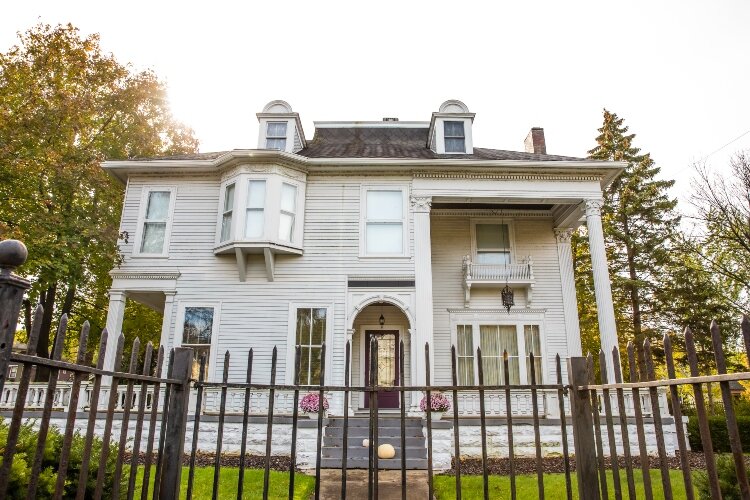
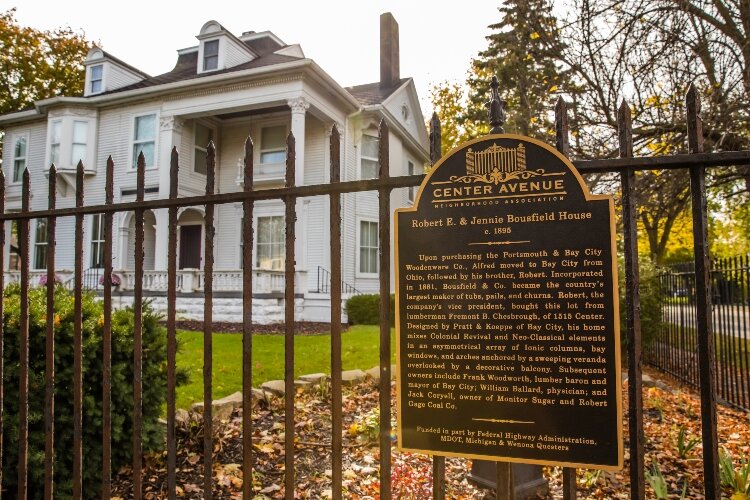
- 1800 Center Ave., the Robert & Jennie Bousfield House
Robert Bousfield came to Bay City from Ohio along with his brother, Alfred, after buying the Portsmouth & Bay City Woodenware Company. In 1881, it was incorporated as Bousfield & Company and was the nation’s largest manufacturer of pails, churns, and tubs. Robert served as Vice President.
The Bousfield Brothers focused on barrel manufacturing during the height of the lumber era in Bay City. The barrels had many uses including as storage for foods such as salt or fish.
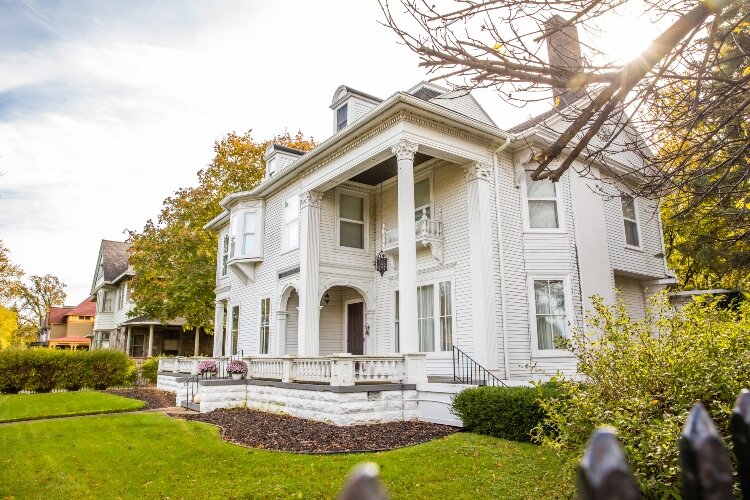
Bousfield purchased this plot of land from local lumberman Fremont Chesbrough, who lived at 1515 Center Ave. The home was designed by local architects, Pratt & Koeppe, and combines both Neo-Classical and Colonial-Revival elements with its bay windows and anchored arches with a unique balcony overlooking a veranda. It was completed in 1896.
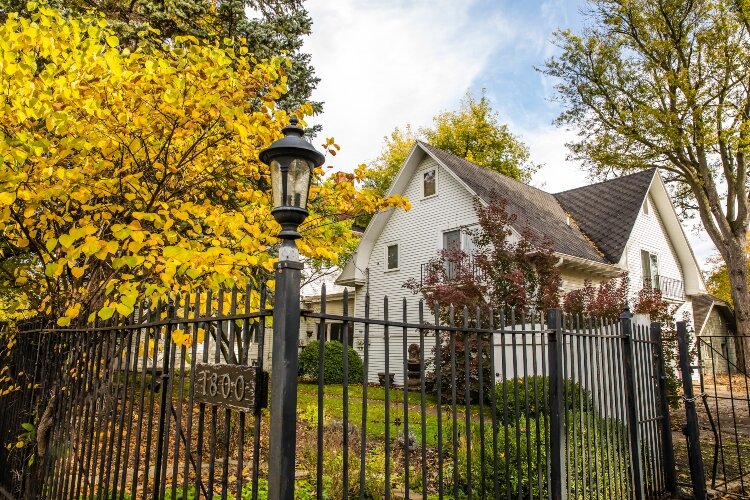
Subsequent owners include Frank Woodworth, lumber baron and Mayor of Bay City; William Ballard, physician; and Jack Coryell, owner of Monitor Sugar and Robert Gage Coal Co.
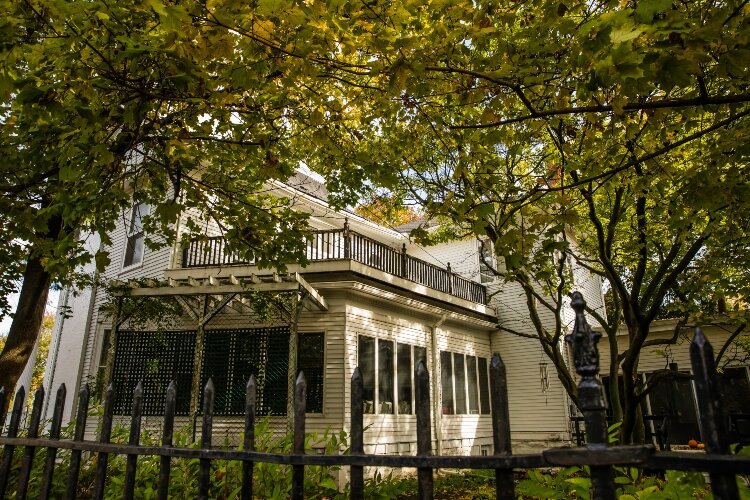
The home is a 2½-story Queen Anne style and comes with a cross gabled garage on the property. The home’s roof is gable-on-hip and has arched roof dormers, has cut away bay and oriel windows, and a two-story porch containing entablatures with Corinthian columns. The northeast corner of the home has an umbraged porch with a 1½-story cross gable garage.
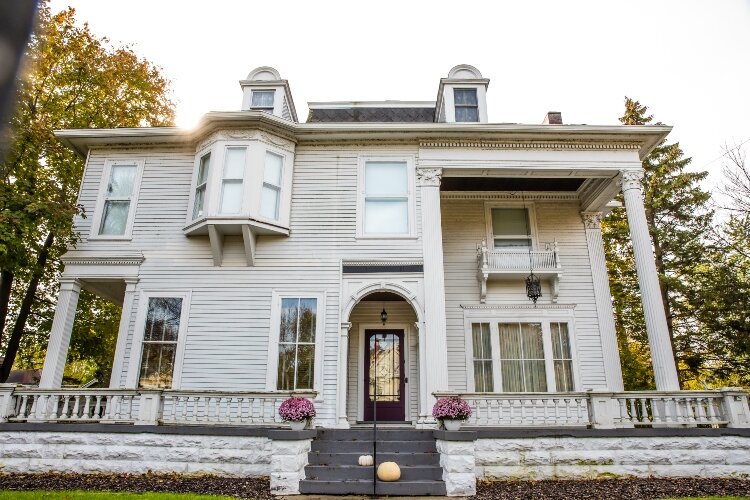
Queen Anne style was popular between 1880 and 1900, popularized by English architect Richard Norman Shaw. Interestingly, Queen Anne reigned over England 1702-1714, but the Queen Anne architectural style is more related to the Elizabethan (1558–1603) or Jacobean (1603–1625) eras.
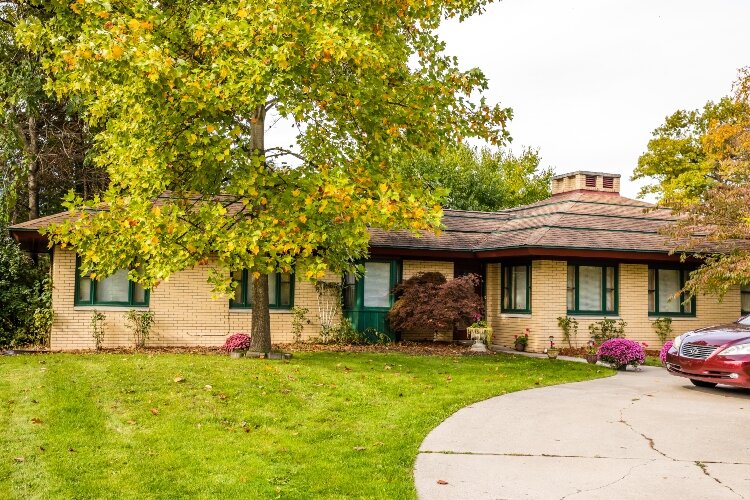
- 2506 Center Ave., Julia Lillian Goddeyne House
This home, on the eastern end of the district, sticks out along Center Avenue. It’s Mid-Century architecture looks strikingly different than the Victorians, Revivals, and Queen Anne styles homes that dominate the district.
Lillian Goddeyne worked as an English teacher at Bay City Central High School and as a porcelain artist. Her father, Leo Goddeyne, established the Goddeyne Hardware store on 3rd and Johnson streets. Her brother, Joseph Goddeyne, was a famed Bay City architect who was behind the Bay County Building, the James Clements Airport Administration Building, the Farragut School, and numerous other structures in Michigan. His own Art-Modern home is situated in the Carroll Park neighborhood.
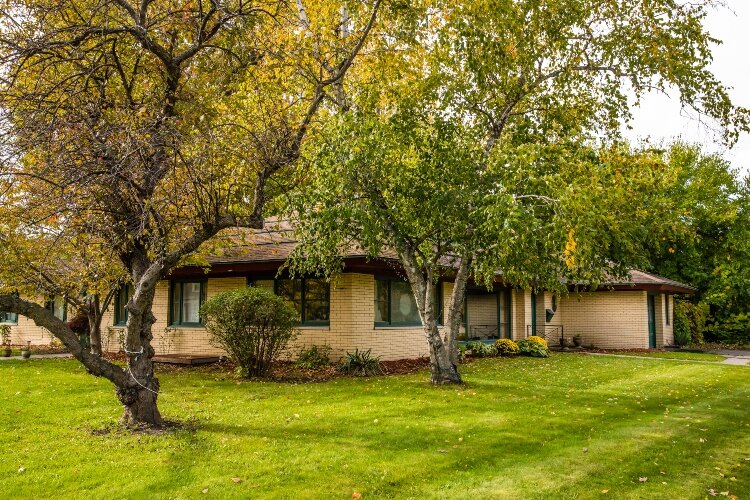
This single-story home is also a fine example of post-World War II architecture and was built in 1954. The home’s horizontal lines bring the house’s low profile into view, containing low chimneys, large windows, and a horizontal banding on a hipped roof. The home also has a half-hipped bay on the front elevation of the home, an incorporated garage, and two inside chimneys.
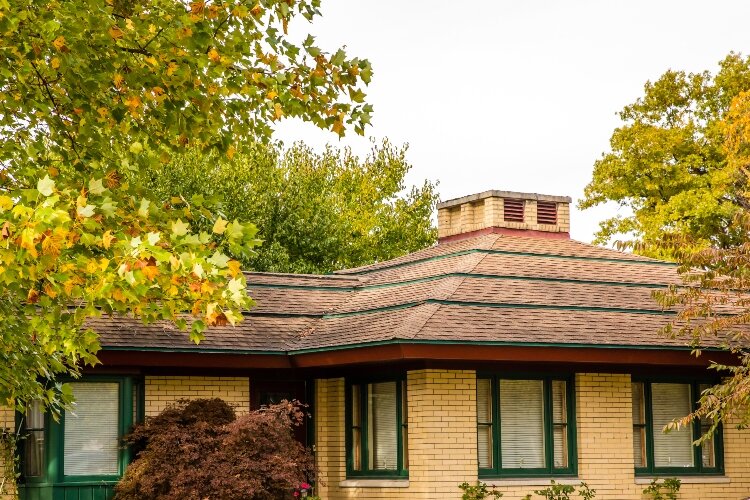
Inside, the home has an open-floor plan with many built-in features, including tongue and groove birchwood work, heated flooring, and bathrooms decorated with the seafoam green, flamingo pink, and cerulean blue tiles popular at the time. In the rear of the house is a sunroom overlooking a courtyard and built-in barbecue.
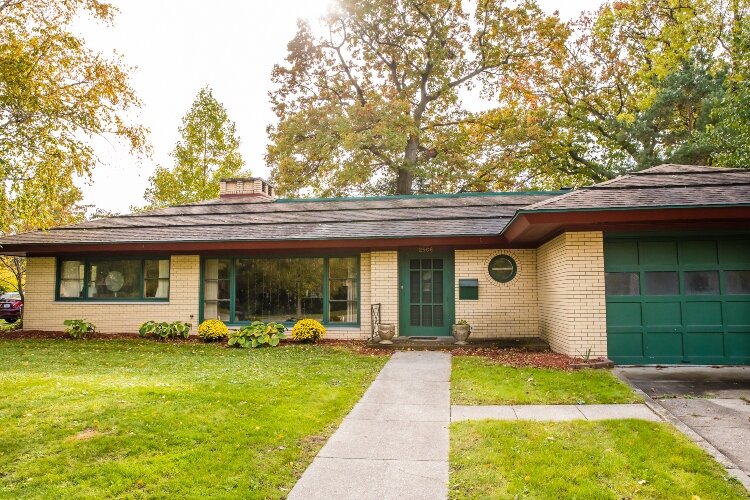
Mid-century architecture was popular between 1935 and 1975 and is typically split between ranch and split level. This home is a ranch style, which originated in California during the 1930s and 1940s and was influenced by Frank Lloyd Wright’s “Prairie Style Home.”
This style of home blossomed after World War II with returning soldiers needing space for growing families and attached garages for the new family car.
Related Articles

River Days returns to downtown Midland this week
Hot air balloons, live music, family activities and fireworks will return to downtown Midland as River Days celebrates its annual four-day festival July 30 through Aug. 2.

City of Mural Community Festival returns this month
United We Go will bring Bay City’s public art scene to life Aug. 11-16 during the fourth annual City of Mural Community Festival. The weeklong event will feature four new murals, community painting opportunities, live entertainment and the Paint the Park fundraiser at Wenonah Park.

Community leaders to receive Bay Area Community Foundation’s highest honor
The Bay Area Community Foundation will honor Ellen Charlebois and Michael Hanisko with its highest recognition, the Peggy Rowley Community Enrichment Award, during the 2026 Faces of Philanthropy Celebration.


