NAMI Family-to-Family program provides hope and mental health support
The National Alliance on Mental Illness (NAMI) Middle Michigan kicked off its free Family-to-Family education series this month. The eight-week-long course helps caregivers and family members of those living with a mental illness.
The National Alliance of Mental Illness (NAMI) is the nation’s largest grassroots mental health organization working to raise awareness, stop stigmas, and advocate for better health. There are over 650 NAMI state organizations and affiliates. Within the Great Lakes Bay Region, the NAMI Middle Michigan chapter works to provide support and education to those in need. This chapter serves the Arena, Bay, Clare, Gladwin, Gratiot, Isabella, Mecosta, Midland, Ogemaw, Osceola, and Roscommon communities.
Family-to-Family is an eight-week long, evidence-based educational series designed for family, significant others, friends and caregivers of people living with a mental illness. Locally, the program has been serving the Midland community since 2016, supported by the Christian Service Funding Committee of Blessed Sacrament Parish of Midland.
The Family-to-Family program officially kicked off Feb. 24 and runs through April 14.
Virtual Zoom meetings take place from 6:15 to 8:45 p.m. on Tuesday nights.
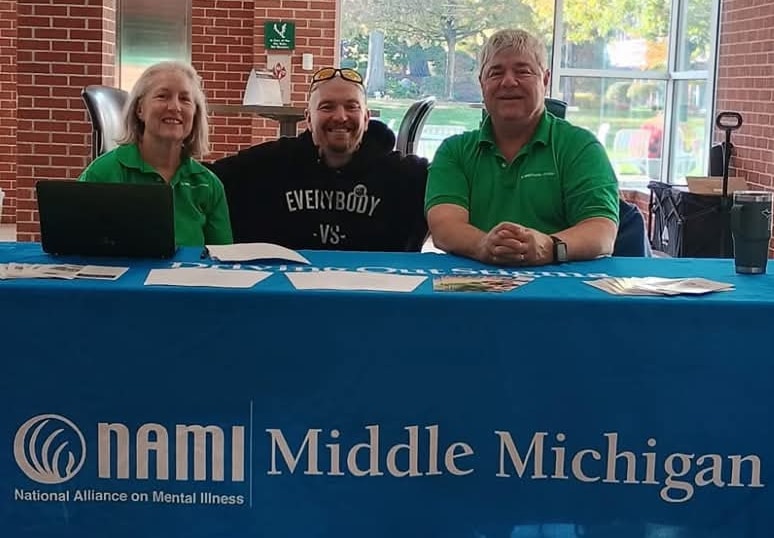
Dan Corbat is a volunteer coordinator for the Family-to-Family program for the NAMI Middle Michigan affiliate. He has a very personal history with the organization. In 2013, he was introduced to NAMI’s Family-to-Family program when his own son started experiencing mental illness symptoms. Now, he’s a facilitator during the training, helping people who were in the same spot he once was.
Corbat recalls how his son’s mental illness served as a catalyst for him to learn more about mental health, NAMI, and start volunteering.
“When our son had his first mental break about 13 or 14 years ago, we didn’t know what to do. We were scared to death, and had never experienced anything like this before,” Corbat says. “We found NAMI through the nurses at the behavioral health unit at the hospital. We looked into it and attended the Family-to-Family program and it literally changed our life. We learned to understand mental illness and how to cope with our loved one, and how to have empathy.”
Corbat says, much like the larger mission of NAMI, this series aims to provide hope for people who are otherwise feeling hopeless, and to offer a light in a dark time.
“This course provides people with education and a hope for a better tomorrow. That in itself is so valuable because it’s easy to lose hope when you see a loved once in such dire circumstances,” Corbat says.
The two-and-a-half-hour classes take place every Tuesday night for eight weeks virtually. The classes cover everything from how to understand mental health conditions, treatment and medication options, what to do to prepare for a crisis, understanding mental health diagnosis, communication methods, problem-solving, collaboration recovery, and sharing stories.
One of Corbat’s favorite classes throughout the course is the one focused on communication and problem-solving.
“This is where we have some exercises we do with folks, it’s not just lectures. We actually have communication scenarios that we use with roleplaying so folks can get really involved,” he says.
Another class is focused on collaboration and recovery — to better understand and empathize with their loved ones.
“We’re not trying to give them answers or how to fix their loved ones’ problems, but we’re trying to help them better understand the illness, ” Corbat says. “We learn so much about the illness and what we can do to communicate with and empathize with our loved one. This really builds a level of trust, that in turn, can improve their mental health and wellbeing. There’s no cure to any of this, but that doesn’t mean there isn’t hope our loved ones can’t be self-sufficient and live a relatively normal life.”
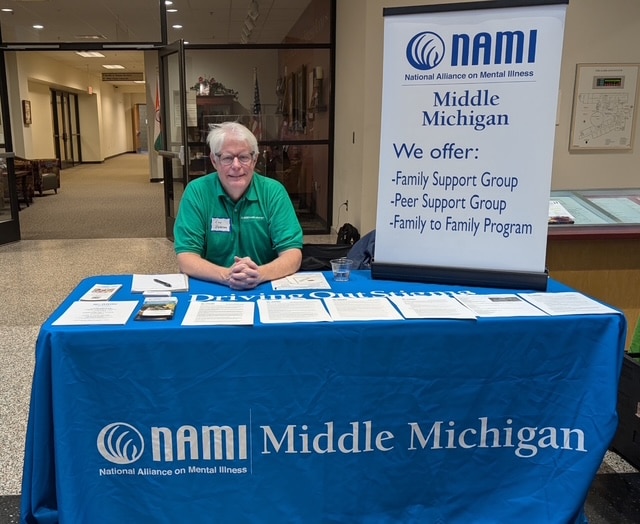
After the class is over, participants are also given additional information on access to care and more support services too.
Sharing those personal stories help to create bonds between families in the group, helping participants realize they’re not alone. By the end of the course, Corbat says they really feel more like family.
The classes also cover the importance of self-care for caregivers or family members who are otherwise overwhelmed or burnt out from caring for others.
“That’s one thing we always try to stress — you can’t take care of anybody else if you don’t take care of yourself. We also want to remind people to not feel guilty about that. It’s so important,” Corbat says.
Over the past decade, Corbat has seen more conversation around mental health, and credits some of that to the COVID pandemic.
“While the stigma is still there and we’ve got a long way to go, people are talking a lot more about mental health. They’re less afraid to talk about it now,” he says. “The only way we’re going to completely squash that stigma is if we talk about it even more. I’m always ready, willing, and able to share my story with anyone who would want to listen to it.”
Although the course’s first class kicked off on Feb. 24, Corbat says folks can still sign up before the second class on March 3. Folks can call Dan Corbat (989-948-3273) or email: dcorbat57@gmail.com to sign up.
Author

Related Articles
Smart court technology, renovations planned at Greater Midland Tennis Center
The Greater Midland Tennis Center announced new facility upgrades aimed at improving player development and attracting high-level tournaments.

Hidden Harvest turns waste not into want not across the Great Lakes Bay Region
Take a look behind the scenes at Hidden Harvest, which saves around 250,000 pounds of surplus food each month, distributing it to pantries and soup kitchens in the region.
Statewide effort tackles postpartum depression and perinatal mood disorders
One of every five* new mothers experiences perinatal mood disorders, but only a small number receive the help they need. The Michigan Health and Hospital Association is working to change that.