
A new view from the saddle: Midland Police introduce mounted patrol
Midland’s first-ever mounted patrol unit is bringing a quieter, more approachable form of policing to community events, creating new opportunities for connection.
On a warm summer evening in downtown Midland, it won’t be sirens or flashing lights that draw a crowd. It will be something slower, steadier, and perhaps a little unexpected. The soft clop of hooves. The quiet presence of a horse moving through a familiar space in a completely new way.
For the first time in its more than 100-year history, the Midland Police Department is introducing a Mounted Patrol Unit, a pilot program designed not for urgency, but for connection.
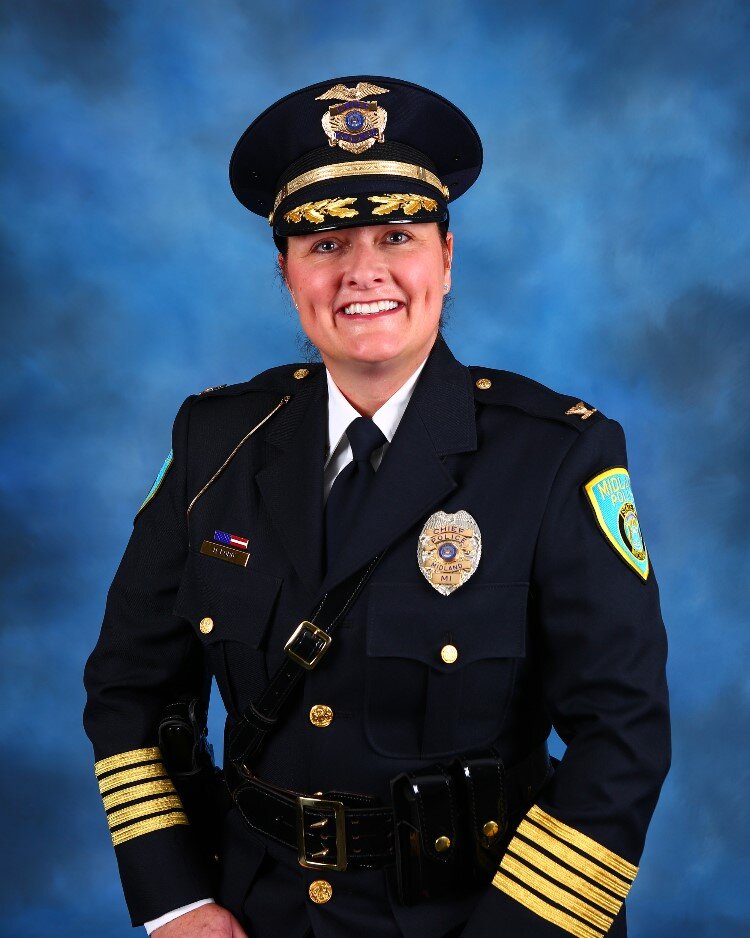
Chief Nicole Ford, who has led the department since 2020, describes the idea as both practical and deeply human. It begins, as many good ideas do, with a conversation. One of her officers approached her about the possibility. At nearly the same time, she had just returned from the FBI National Academy, where a simple moment stuck with her.
“We all took a field trip,” Chief Ford explains. “And so, all of us are fifteen-plus-year veterans in law enforcement, and they have a mounted unit in DC while we are there, and every one of us stops to get our photo taken with the horse, to pet the horse, to talk to the rider.”
It is a small but powerful observation. If seasoned officers find themselves disarmed and drawn in by a horse, what might that mean for the broader community?
That question became the foundation for Midland’s mounted patrol pilot. At its core, the program is not about enforcement. It is about approachability, visibility, and meeting people where they are, especially those who may not feel comfortable engaging with police in more traditional ways.
“We are always looking for new and creative ways to connect with members of our community that maybe we haven’t connected with,” Chief Ford remarks. “And so, this seems like a really good way to do that.”
The program will launch with four officers: Sergeant Armstead, Officer Wilson, Officer Paisley, and Officer Mulder. Each brings not only law-enforcement experience but also a lifelong familiarity with horses. Even so, the department does not leave anything to chance. Officers are required to complete specialized training through an outside equine organization, with a focus on navigating crowds, noise, and unpredictable environments.
“They are required to train with their unit,” Chief Ford continues. “We want the horses to be very used to things like sirens and loud noises and being around people.”
The horses themselves are what make this program especially unique. Unlike larger metropolitan departments that maintain city-owned stables, Midland’s model relies on something more personal and, in many ways, more sustainable. The horses belong to the officers.
“We are similar to many of the county programs where they’re the individuals’ horses,” Chief Ford says. “Therefore, the cost for the city is extremely nominal, because they are required to handle the vetting, food, boarding, whatnot.”
In a time when municipal budgets are often stretched thin, that distinction matters. The primary cost to the department is the outfitting of both horse and rider. Thanks to the commitment of the officers themselves, the program moves forward without significant financial burden or outside funding.
Still, launching something new always comes with its share of unexpected details. Some are logistical. Some are, frankly, a little more down to earth.
“Poop is a larger part of this challenge than we expected,” Chief Ford says with a laugh.
The solution, like much of the program, reflects a thoughtful balance between innovation and responsibility. Officers manage waste themselves, ensuring that the program does not place an additional strain on city services.
Beyond that, the department spends nearly a year working through liability considerations, training protocols, and operational details to ensure the program is both safe and sustainable.
The mounted unit will operate as a one-year pilot, giving the department a full season to evaluate its impact. Residents can expect to see the horses at community events throughout the warmer months, from downtown gatherings to larger events like the LPGA tournament.
“The main purpose of our horses is [public relations], community events, visibility,” Chief Ford explains.
That emphasis is intentional. Mounted officers do not become part of routine patrol. Instead, they appear in pairs at events, creating opportunities for interaction that feel natural rather than forced.
“I don’t know that it would ever be more than, like, 10 percent of what they would normally do,” she says. “You won’t just ever see an MPD horse out on patrol. That’s not the goal.”
For residents, the experience may feel both novel and familiar. Horses have long played a role in Michigan’s law enforcement history. The Detroit Police Department established one of the nation’s earliest mounted units in 1893, at one point fielding dozens of officers on horseback.
The Michigan State Police, founded in 1917, initially relied on mounted troops before transitioning to motorized patrol just a few years later. Today, mounted units continue to serve communities across the state, primarily in high-visibility and community engagement roles. In many ways, Midland is joining a tradition that is old but newly relevant.
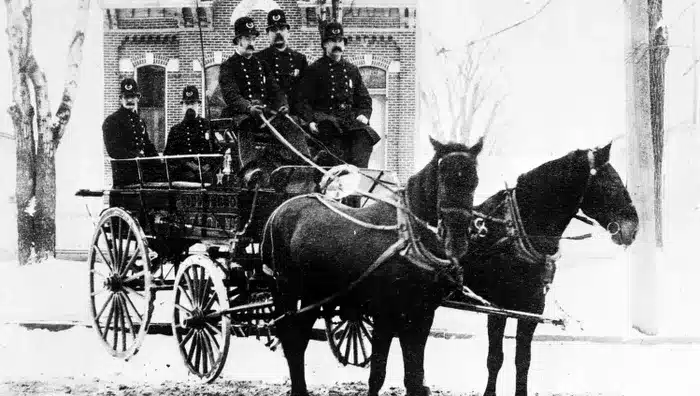
The Midland Police Department itself, established in 1923 with just a chief and a night patrolman, grows into a modern, accredited agency known for its strong community relationships. As it enters its second century, the addition of a mounted unit reflects both a respect for history and a willingness to evolve.
Chief Ford sees it as an extension of the department’s broader philosophy. “We’re very excited,” she says. “This is what we believe is a very creative and unique way for us to reach parts of our community.”
That reach may be especially meaningful for populations who already have a connection to horses. Chief Ford cites the role of equine therapy in the special-needs community as one example of how the program could open new doors. “If we have this gateway to reach people that we didn’t normally get to reach, that is truly the goal,” she shares.
For those encountering a mounted officer for the first time, the guidance is simple and rooted in mutual respect. “Make sure you make contact with the rider first,” Chief Ford says. “They will invite you in. That’s what we want. We want people to have that type of contact.” It is an invitation, really. One that reflects a broader shift in how policing can look and feel in a community like Midland.
There is, of course, no guarantee of what the future will hold. At the end of the pilot year, the department will evaluate the program based on feedback, outcomes, and any challenges that arise. If successful, it may expand modestly, perhaps adding additional riders while maintaining its core purpose. “I don’t see it ever looking a lot different than its intended look now,” Chief Ford notes.
And maybe that is part of what makes this moment feel meaningful. In a profession often defined by urgency and response, the mounted unit offers something quieter. A chance to slow down. To meet eye to eye. To create space for conversation. Chief Ford is clear about one thing. Progress does not come from standing still. “We ask people to be open-minded,” she adds. “We’re not big fans of we’ve never done that this way.”
In Midland, that mindset takes shape in the steady, deliberate steps of a horse moving through a crowd, reminding everyone who sees it that sometimes, the most powerful way forward is also the most unexpected.
Author

Related Articles
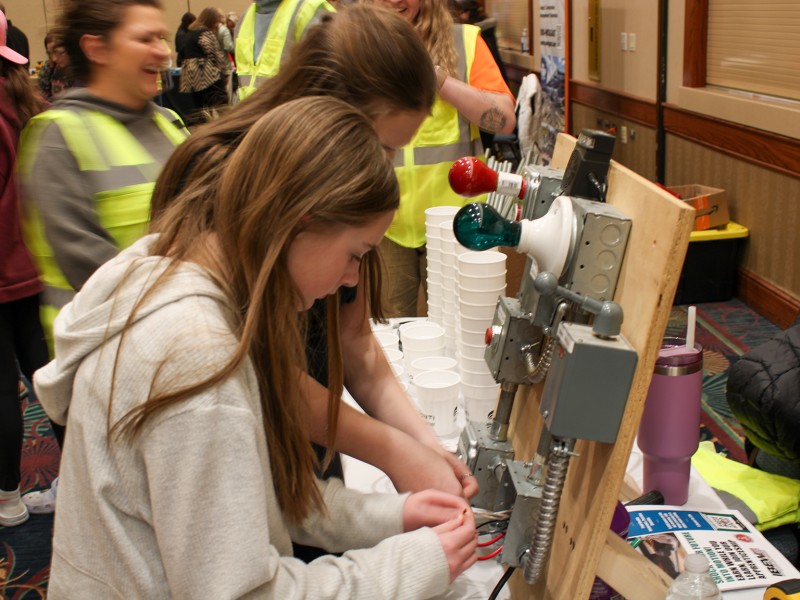
Build Like a Girl draws future tradeswomen from across Mid-Michigan
The sound of drills and laughter filled the Great Hall as students from across the Great Lakes Bay region got hands-on with the trades. What started with just eight girls has grown into a sold-out event helping build the area’s future workforce.
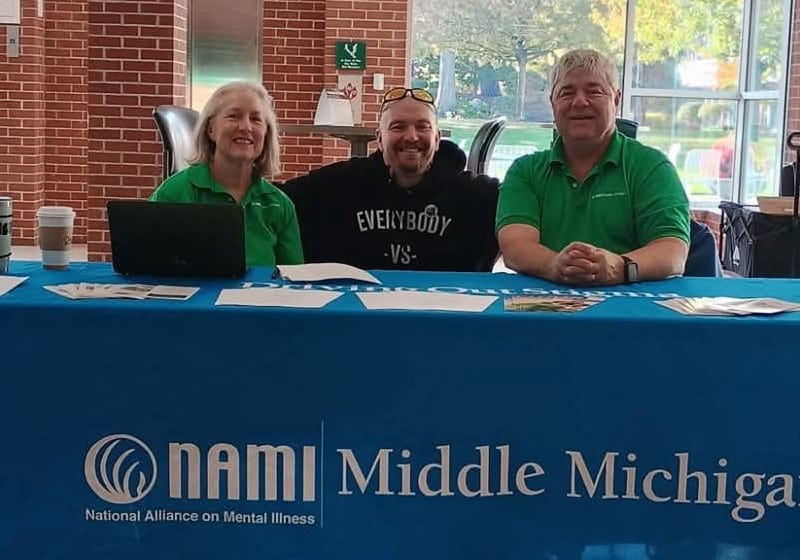
NAMI Family-to-Family program provides hope and mental health support
The National Alliance on Mental Illness (NAMI) Middle Michigan kicked off its free Family-to-Family education series this month. The eight-week-long course helps caregivers and family members of those living with a mental illness.

Bay-Arenac ISD hosts “Unplug and Play” event to encourage screen-free family time
Families across the Great Lakes Bay region are invited to step away from screens and spend time playing together at a free “Unplug and Play” Winterfest.