Bay County coalition is bridging the gap for families during the SNAP and WIC pause
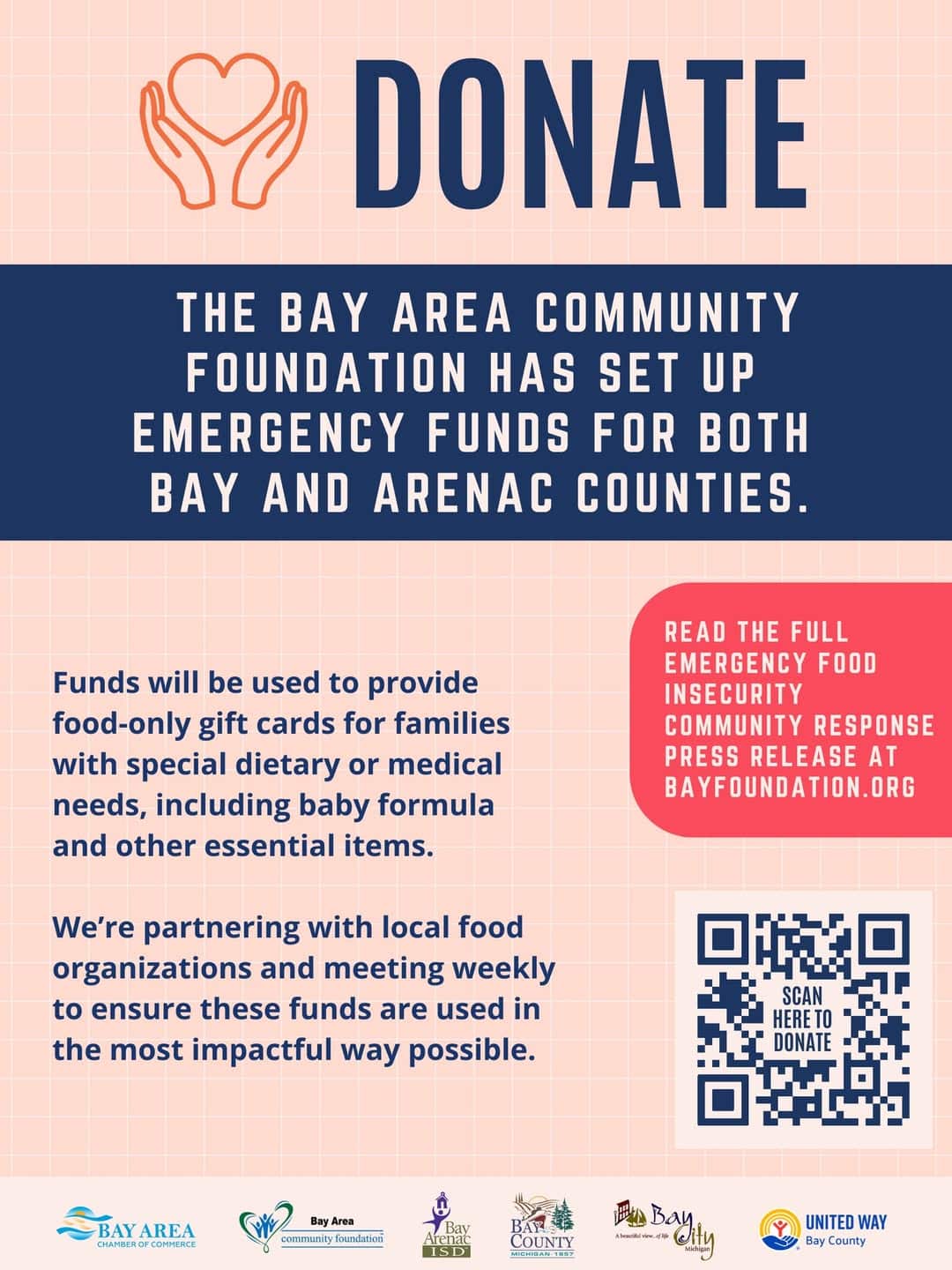
In Bay County, a coalition formed to help families fill their dinner plates. The coalition is tackling the problem in several different ways.The Bay Area Community Foundation established a Food Insecurity Emergency Fund for both Bay and Arenac counties. At the same time, the United Way of Bay County is collecting food to divide between food banks and recruiting volunteers to meet increased demand.
As the federal government pauses food benefits, a coalition of community groups is coming together to keep Bay and Arenac county families fed.
In all, so-called food stamps help more than 18,000 people in Bay County. About 16,566 Bay County residents rely on SNAP (Supplemental Nutrition Assistance Program) every month. An additional 2,100 use WIC (Women, Infant, Children) to buy fresh food and formula for children.
In Michigan, SNAP (also known as the Food Assistance Program or FAP) reaches more than 1.4 million low-income individuals, according to the Michigan Department of Health and Human Services.
Due to the federal government shutdown, the USDA Food and Nutrition Servies announced November 2025 food assistance benefits would be delayed.
In Bay County, a coalition formed to help families fill their dinner plates. The coalition is tackling the problem in several different ways.
The Bay Area Community Foundation established a Food Insecurity Emergency Fund for both Bay and Arenac counties. At the same time, the United Way of Bay County is collecting food to divide between food banks and recruiting volunteers to meet increased demand.
Community Foundation President Shawna Walraven says the Emergency Fund is designed to complement the work of food pantries and expand local capacity.
The Foundation will collect donations and send them out to pantries in order to bolster supplies. The pantries can buy food to stock the shelves or distribute food-only gift cards. Walraven says the Foundation recognizes that some people with infants or allergies may have an especially tough time during the pause and need to buy specialty items they can’t find at a food pantry.
“We’re thinking that immediately, people are going to be in extraordinary circumstances,” she says.
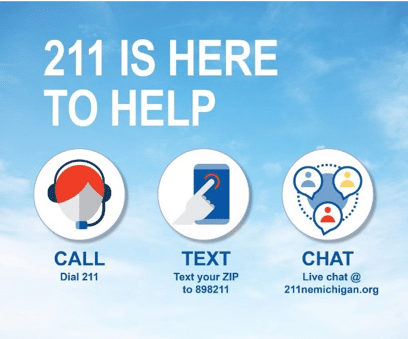
Her goal is to give people who want to help one central location for giving. People seeking help should call 211 Northeast Michigan or visit food pantries and soup kitchens in the area.
Click here to contribute either the Bay or Arenac county fund. Contributions to the fund also can be made via check. Make checks payable to BACF (with Food Insecurity and either Bay or Arenac noted in memo line) and mail them to 1000 Adams Street, Suite 200, Bay City, MI 48708. Call (989) 893-4438 with questions.
The state recently announced efforts to bridge the gap too, but Walraven says she’s been told that money won’t immediately be available.
“No matter what happens, we’re just trying to meet the crisis,” Walraven says.
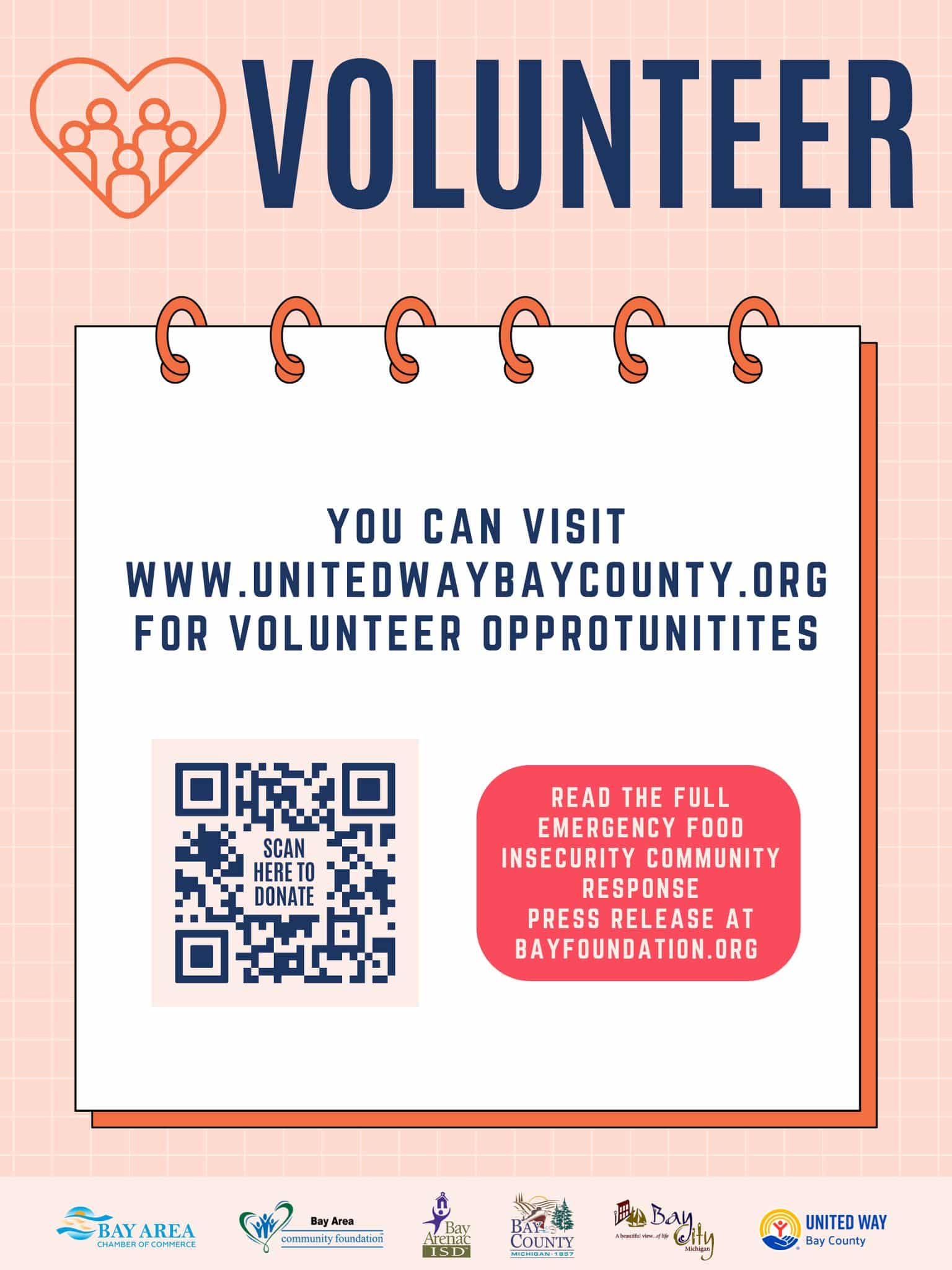
The United Way is focusing its efforts on gathering food and volunteers, says Michaela Garcia, Associate Director of Community Engagement.
“We’re trying to get as many food distribution points as possible,” she says. “We’re just trying to get the food out as much as possible.”
The United Way is accepting donations of non-perishable items at its 909 Washington Ave. offices between 9 a.m. and 3 p.m. Monday through Friday. Every Friday, the donations will be divided between local pantries. The pantries will then distribute the food.
For a list of pantries and other resources, visit the United Way website.
Garcia says businesses and individuals are contacting her about donations and food drives.
“We have good people reaching out,” she says. “It’s going to take the whole community to get through this.”
She is contacting food pantries and food banks in the area to ask about volunteer needs.
Long-term, the coalition expects to continue its work.
Already, 211 Northeast Michigan is seeing an increase in calls. Executive Director Chiara Cameron-Woods says that food-related inquiries increased 70% across the state. Locally, the numbers were similar.
On Sept. 29, 211 Northeast Michigan took 14 food-related calls. A month later, on Oct. 27, the agency took 60 calls for food-related assistance.
From Oct. 12-19, only 64 food-related calls came into 211. That represented about 7% of calls to the agency. A week later – Oct. 20-27 – the volume jumped to 239 food-related calls, representing 19% of all calls.
As the pause in benefits continues, the local coalition will keep coordinating nonprofits, schools, governments, and health and human services agencies to fill funding gaps and help with food distribution plans. That includes keeping lines of communication open between stakeholders to ensure a unified response and to make sure 211 Northeast Michigan is prepared to respond.
The other coalition partners include the Bay Area Chamber of Commerce, Bay-Arenac Intermediate School District, Bay County, and the City of Bay City.
Author

Related Articles

Partner Partner Content “When I grow up.” Inspiring kids to dream big about careers in health care
These collaborations show how growing interest in health care careers can begin early.

Statewide effort tackles postpartum depression and perinatal mood disorders
One of every five* new mothers experiences perinatal mood disorders, but only a small number receive the help they need. The Michigan Health and Hospital Association is working to change that.
Thanksgiving meals across the Great Lakes Bay Region
Nonprofits, churches, and community centers are offering meals, pantry items, and additional support for residents in need this holiday season.