Building the future workforce: Regional collaboration takes center stage during Career and Technical Education Month
During Career and Technical Education Month, the partnership between the Midland County Educational Service Agency and the Mid-Michigan Manufacturers Association highlights what happens when schools and industry move in step.
Across the Great Lakes Bay Region, educators and manufacturers are leaning into a shared reality: preparing students for tomorrow’s careers requires working together today. One of the most promising examples of that collaboration is the growing relationship between the Midland County Educational Service Agency (ESA) and the Mid-Michigan Manufacturers Association (M3A).
At the center of that effort is Bill Henderson, president of Aircraft Precision Products, Inc. in Ithaca, Michigan, and a leader helping guide the vision for the M3A Education Special Interest Group. Henderson’s perspective reflects decades of experience in manufacturing and a deep belief that collaboration, not competition, is what will ultimately strengthen the region.
For Henderson, the importance of M3A begins with its origins. The association was formed through the merger of the Central Michigan Manufacturers Association and the Great Lakes Bay Manufacturers Association, creating a unified regional voice for industry. That consolidation matters. As Henderson explains, manufacturers have long believed that business is easier when companies work together, especially in areas where collaboration benefits everyone, like workforce development, education partnerships, and sharing best practices.
“There are simply things we can’t do alone,” Henderson notes. Whether it’s accessing workforce development grants, expanding employee training, or building stronger relationships with schools, a collective approach opens doors that individual manufacturers often struggle to unlock on their own. By coming together under M3A, companies across Mid-Michigan are strengthening their ability to invest in people and ultimately the communities where they operate.
That collaborative mindset is especially critical when it comes to education. While partnerships between manufacturers and schools have existed for years, Henderson believes the region is now entering a new phase, one that expands successful models west of Midland further east across the Great Lakes Bay Region. Historically, education and industry have sometimes operated on different wavelengths, he says, but that’s beginning to change.
The goal now is simple but powerful: bring everyone to the same table. That means educators, manufacturers, parents, and community leaders working together in an open, nonjudgmental way to better understand each other’s needs. When that alignment happens, opportunities multiply, not just for businesses, but for students who benefit from clearer, more relevant career pathways.
At the heart of the conversation is communication. Henderson points out that many manufacturers don’t sell directly to consumers, which can make community engagement feel less urgent at first glance. But that perspective is short-sighted. Companies that stay invisible often struggle to attract talent, especially in smaller communities where workforce pipelines are deeply local.
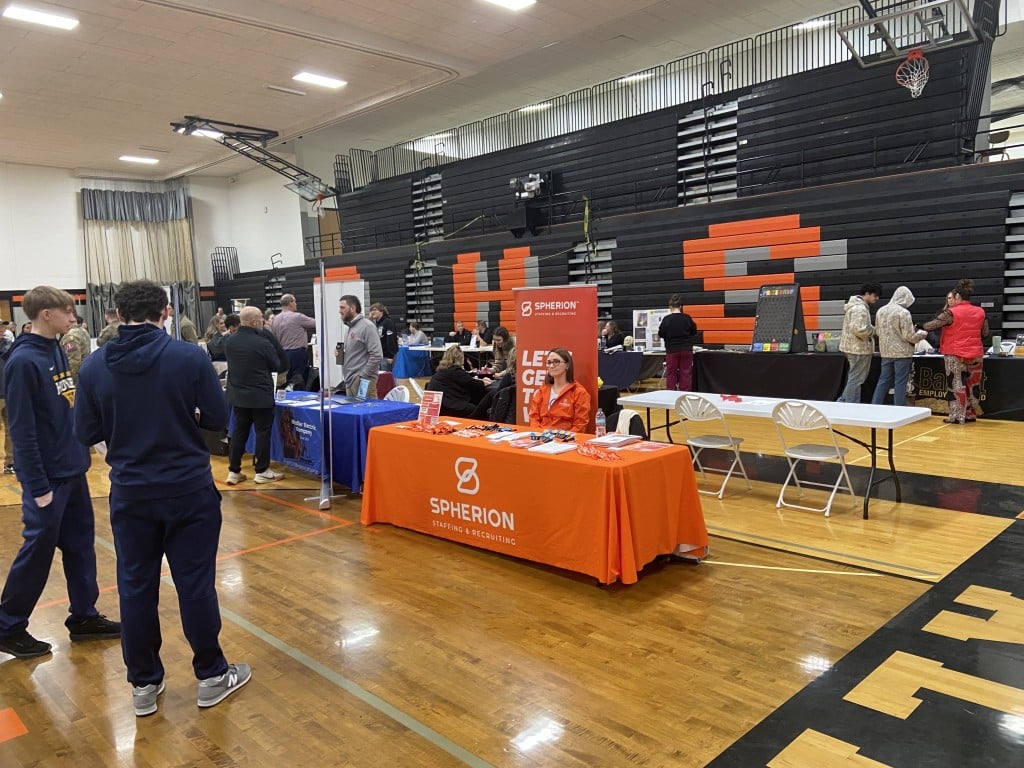
That’s where schools play a vital role. From career fairs to classroom visits, partnerships between educators and manufacturers help students connect what they’re learning with real-world applications. Henderson points to events like countywide career days as powerful examples. These gatherings allow students to explore industries they may never have considered and sometimes even interview for future opportunities.
Those connections also reshape how students view education itself. When industry leaders step into classrooms and explain how algebra or attendance translates into workplace success, it reframes learning in meaningful ways. For manufacturers, soft skills like reliability and showing up consistently are just as critical as technical knowledge.
Looking ahead five years, Henderson envisions a future where job-based learning is far more common across the region. While Career and Technical Education (CTE) programs already provide strong foundations, he believes the next step is deeper immersion in real workplaces. Co-ops, internships, and apprenticeships give students a chance to experience careers firsthand, where “the rubber meets the road,” as he describes it.
This hands-on exposure doesn’t replace classroom learning. It strengthens it. Students who move between school and workplace environments gain confidence, clarity, and practical skills that traditional models alone can’t provide. For industries facing ongoing workforce shortages, those experiences can make the difference between curiosity and career commitment.
As M3A expands its reach eastward, Henderson sees several practical steps that could deliver immediate impact. One is strengthening support for career navigators, the professionals who connect students with job-based learning opportunities. By simplifying those connections and creating clearer pathways, both students and employers benefit.
Another pressing issue is the looming shortage of CTE instructors. A state waiver that allowed experienced professionals to teach without traditional certification is expiring, and Henderson warns that many skilled instructors could be lost if solutions aren’t found. Here, he believes the manufacturing community can play a powerful advocacy role, helping policymakers recognize the value of real-world expertise in technical education.
Underpinning all this work is a clear and focused vision. The M3A Education Special Interest Group has articulated its purpose with striking simplicity: to attract, develop, and retain local talent. Its mission builds on that foundation: to build a strong, sustainable future for Mid-Michigan by establishing and growing collaborative partnerships with industry and community leaders to connect youth, parents, and educators with the region’s high-demand career opportunities.
Those statements are not just words. They represent a shared commitment to long-term regional vitality. In communities like Midland, Saginaw, Bay, and beyond, workforce development is inseparable from economic health. When young people see opportunities close to home, they are more likely to stay, build careers, and invest in the communities that shaped them.
Local education leaders share that sense of urgency and optimism. Midland County ESA Superintendent John Searles emphasizes the importance of thinking regionally and proactively.
“We are looking at a regional approach going forward, including other ISDs,” Searles explains. “We want to foster relationships between students and businesses to give students real-world experience while adding new talent to the manufacturing pipeline. When we work together across districts, we can shape the narrative and move the needle forward instead of reacting after the fact. Partnerships like the one we’re building are essential to making this successful.”
That regional lens reflects a broader shift underway across Mid-Michigan. Instead of isolated efforts, schools and manufacturers are aligning around shared goals, stronger talent pipelines, more accessible career exploration, and clearer pathways from classroom to career.
For Henderson, the moment feels both exciting and unprecedented. The merger that created M3A marked the first time organizations like these combined at this scale, and with that comes both opportunity and uncertainty. But if there is one thing his experience has shown, it is that meaningful progress rarely happens in isolation.
During Career and Technical Education Month, that message resonates deeply. CTE is not just about programs or pathways. It is about possibility. It is about giving students the chance to see themselves in careers they may have never imagined and ensuring businesses can grow with the talent they need.
In Mid-Michigan, partnerships like the one between Midland County ESA and M3A are proving that when education and industry move forward together, entire communities benefit. And perhaps most importantly, they are showing students that the future they are working toward is not somewhere far away. It is right here at home.
Author

Related Articles

Mid-Century Modern Midland: New book celebrates city’s architectural oasis
Mid-Century Modern Midland highlights the community’s innovative legacy and the collaborative effort of residents, historians, and volunteers to document and preserve this unique heritage.
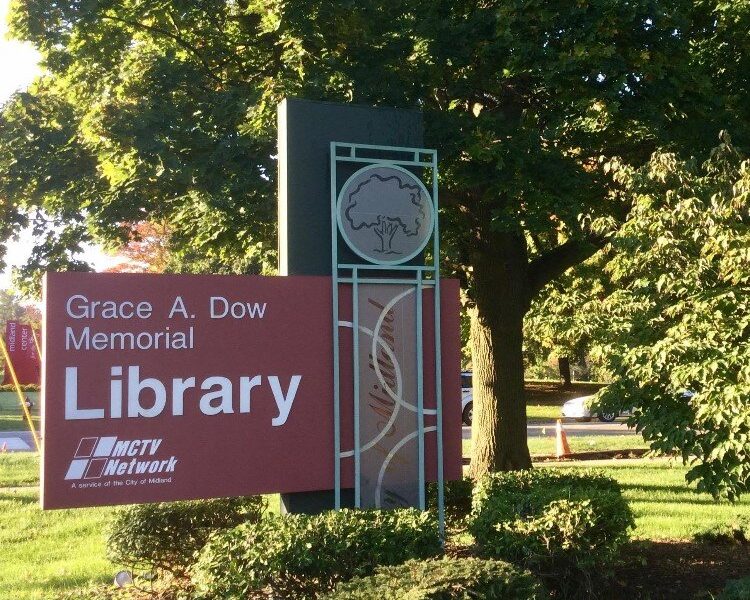
New chapter begins for the Grace A. Dow Memorial Library during open house week
Final preparations are underway for the much-anticipated unveiling of new and improved spaces within the Grace A. Dow Memorial Library in Midland.

Closing the digital gap: High-speed internet to reach all of Midland County by 2029
High-speed internet access is expected to reach every household in Midland County by 2029, opening the door to better access to education, healthcare, and employment across the community.