
Community coalition to continue its work, even after the federal shutdown ends
Even after the federal government shutdown ends, it’s unclear when food benefits will reach families. A local coalition plans to continue its work to ease food insecurity.
The federal government shutdown seems near its end, but families in Bay and Arenac counties still may be feeling the financial pinch. As a result, a Bay County coalition that formed to address food insecurity during the government shutdown says it will continue its work.
On Oct. 1, the federal government shut down after Congress failed to pass appropriations legislation for fiscal 2026. As part of that, the USDA Food and Nutrition Services announced a delay in releasing November 2025 food assistance benefits.
In all, so-called food stamps help more than 18,000 people in Bay County. About 16,566 Bay County residents rely on SNAP (Supplemental Nutrition Assistance Program) every month. An additional 2,100 use WIC (Women, Infant, Children) to buy fresh food and formula for children.
In Michigan, SNAP (also known as the Food Assistance Program or FAP) reaches more than 1.4 million low-income individuals, according to the Michigan Department of Health and Human Services.
While some federal and state money was released to fund the programs during the shutdown, it’s not reached everyone. And it’s unclear exactly when families will see benefits restored.
“Because of the uncertainty, we haven’t stopped our efforts,” says United Way of Bay County President/CEO Nicole Luczak says.
Even if benefits are restored to their previous levels immediately, Luczak points out that federal workers haven’t been paid since the government shutdown began more than a month ago. Schools are about to close for Thanksgiving and Christmas breaks, meaning kids won’t have breakfast and lunch at school for days, or weeks, at a time.
“I think people are worried and we’re trying to calm them as much as we can,” Luczak says.
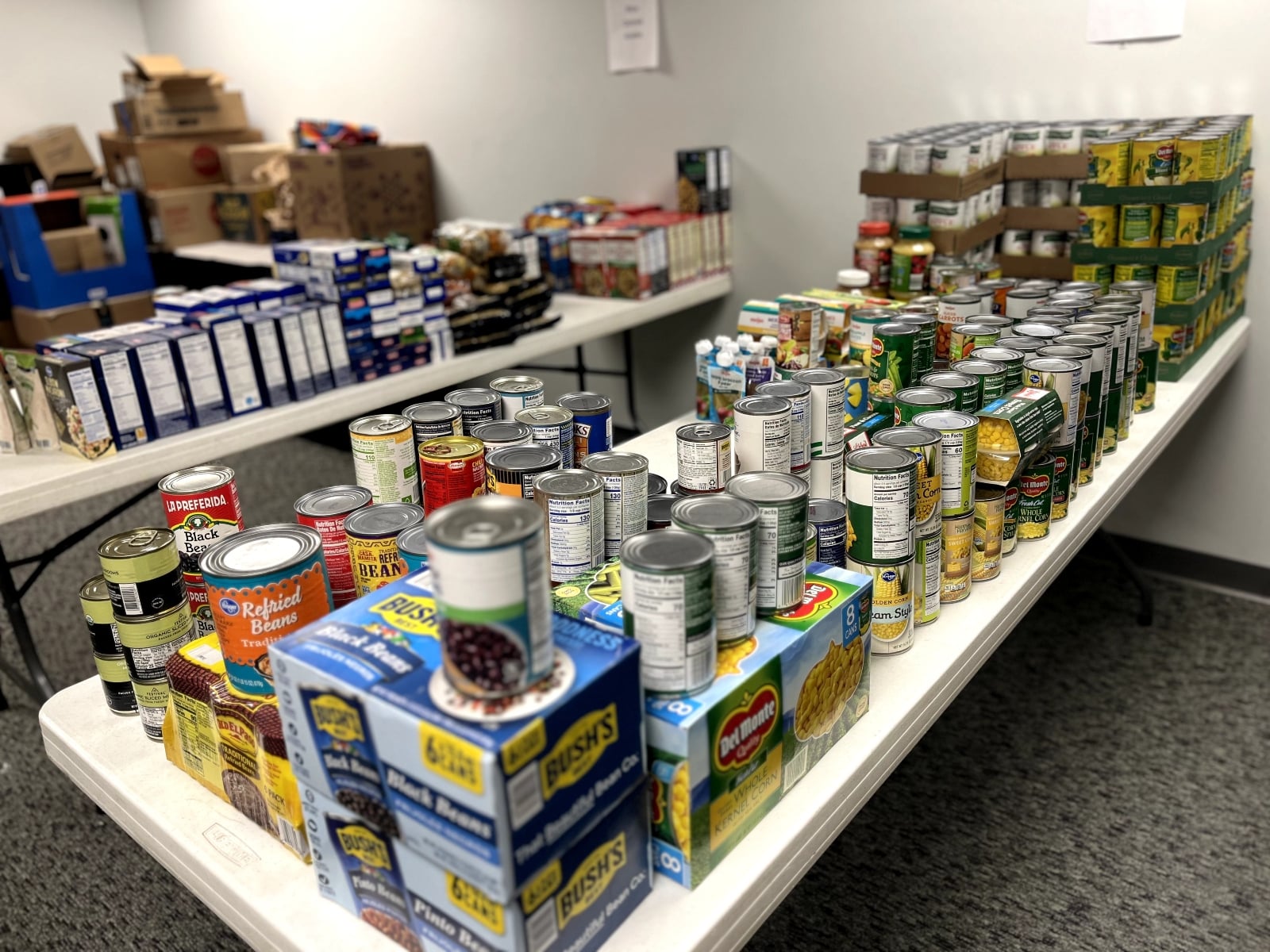
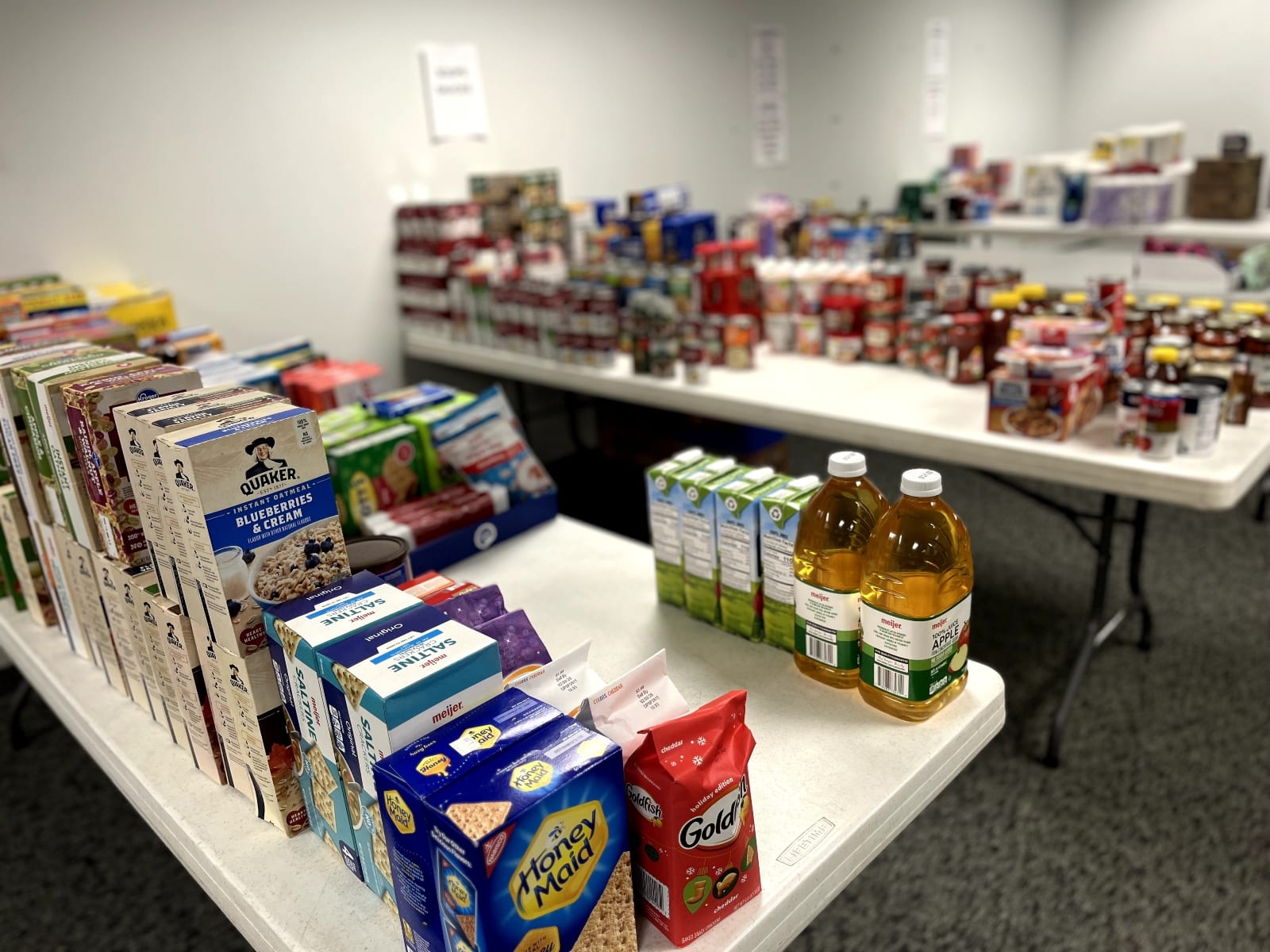
To do that, the United Way of Bay County is collecting food to divide between food banks and recruiting volunteers to meet increased demand. The Bay Area Community Foundation established a Food Insecurity Emergency Fund for both Bay and Arenac counties.
Community Foundation President Shawna Walraven and Luczak hope keeping pantry shelves full reduces concerns about food availability.
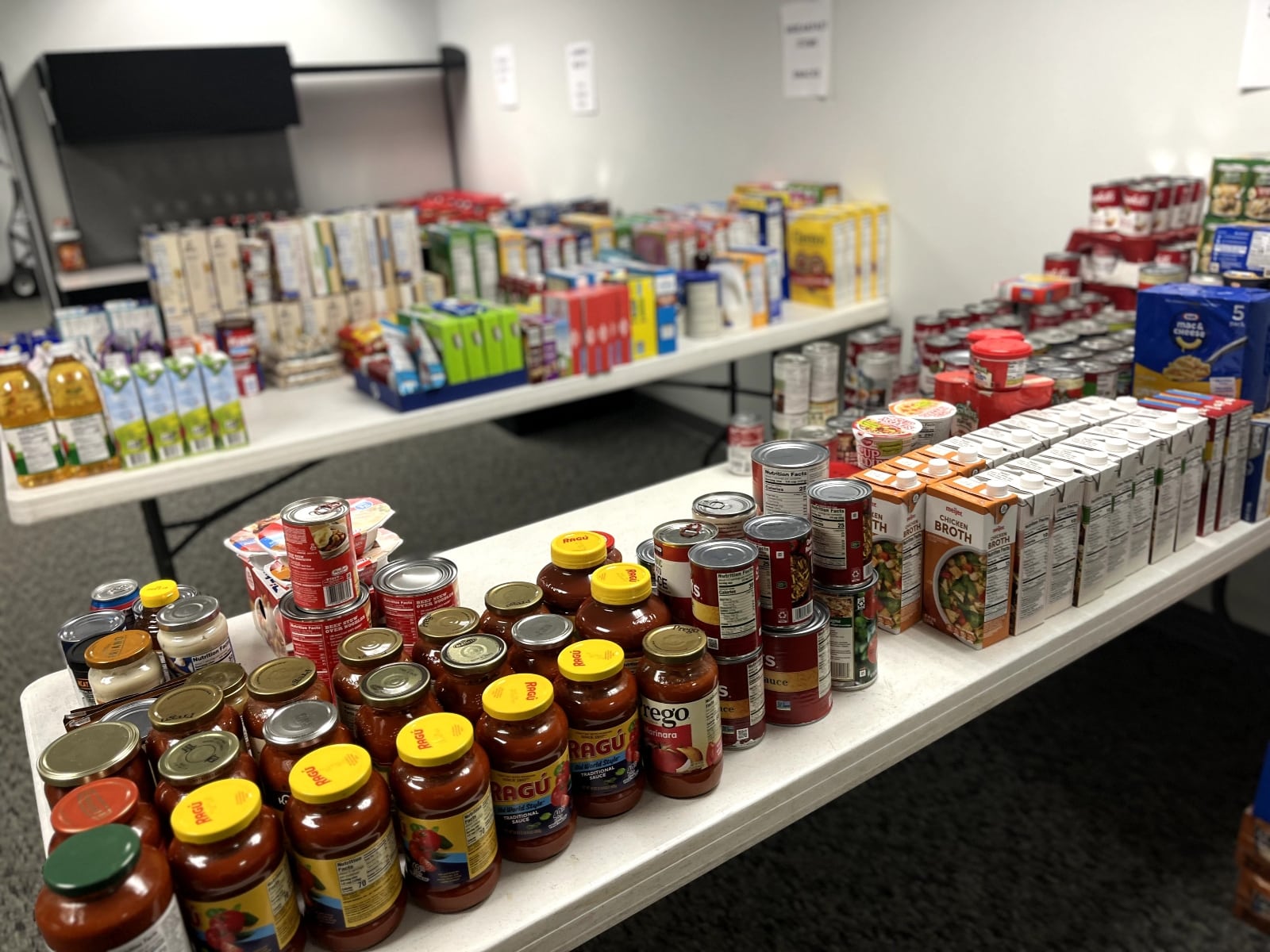
“We have a great network of food pantries and we’re doing whatever we can to re-stock them,” Luczak says.
Walraven says the Emergency Fund is designed to complement the work of food pantries and expand local capacity.
“It looks like the government will re-open and hopefully that should help,” Walraven said earlier this week.
So far, the United Way has distributed 9,670 pounds of food to local pantries. In addition, it held several food distributions in November with three more scheduled for December. A list of food pantries and food distributions is kept updated on the United Way website and Facebook page.
Through the process, Luczak and Walraven have been impressed with community response. In addition to the United Way and Community Foundation, coalition partners include the Bay Area Chamber of Commerce, Bay-Arenac Intermediate School District, Bay County, and the City of Bay City.
Others also have stepped up, holding food drives or donating goods and money to the effort. The Saginaw Basin Land Conservancy offered its trucks and trailers to bring food from the Food Bank of Eastern Michigan to pantries. A&T Produce donated all its end-of-season squash and pumpkin pies.
In addition, the United Way of Bay County is working with agencies such as the Department of Health and Human Services, Do-All Inc., Dow Bay Area Family YMCA, and The Arc to provide pre-filled bags of food for those agencies to distribute to clients.
“I’m very proud of Bay County and how we’ve worked together,” Luczak says.
As Nov. 1 approached, 211 Northeast Michigan saw an increase in calls. Executive Director Chiara Cameron-Woods says that food-related inquiries increased 70% across the state. Locally, the numbers were similar.
On Sept. 29, 211 Northeast Michigan took 14 food-related calls. A month later, on Oct. 27, the agency took 60 calls for food-related assistance.
From Oct. 12-19, only 64 food-related calls came into 211. That represented about 7% of calls to the agency. A week later – Oct. 20-27 – the volume jumped to 239 food-related calls, representing 19% of all calls.
On Oct. 28 and 29, calls peaked. On the 28th, 64 calls (representing 28% of total volume) were about food. On the 29th, 63 calls (representing 36% of total volume) were about food.
It’s slowed down since then, Cameron-Wood says.
“We have definitely seen the peak and things have started to even out,” she says.
On Nov. 10, only 33 calls – or 12% of total volume – were about food.
How can you help?
- The United Way is accepting donations of non-perishable items at its 909 Washington Ave. offices between 9 a.m. and 3 p.m. Monday through Friday. Every Friday, the donations will be divided between local pantries. The pantries will then distribute the food.
- Click here to contribute either the Bay or Arenac county fund. Contributions to the fund also can be made via check. Make checks payable to BACF (with Food Insecurity and either Bay or Arenac noted in memo line) and mail them to 1000 Adams Street, Suite 200, Bay City, MI 48708. Call (989) 893-4438 with questions.
How can you get help?
- People seeking help should call 211 Northeast Michigan or visit food pantries and soup kitchens in the area.
- A list of food pantries and food distributions is kept updated on the United Way website and Facebook page.
Author

Related Articles

ABC Greater Michigan invites community to grant wishes; make dreams come true for Make-A-Wish Michigan children
The Associated Builders & Contractors Greater Michigan chapter invites the community to be a part of the grant-wishing opportunity at the 39th annual Great Lakes Bay Regional Fundraiser on Friday, April 17.

Thanksgiving meals across the Great Lakes Bay Region
Nonprofits, churches, and community centers are offering meals, pantry items, and additional support for residents in need this holiday season.

How Midland’s Great Start Collaborative nurtures children and strengthens community
Great Start Collaborative: Uniting families, educators, and community partners to ensure every child can thrive.


