
Re-visiting a family renovating an historic home on North Grant Street
As the Hofmann family continues renovating a historic home on Bay City's East Side, they also are making big plans for the neighborhood.
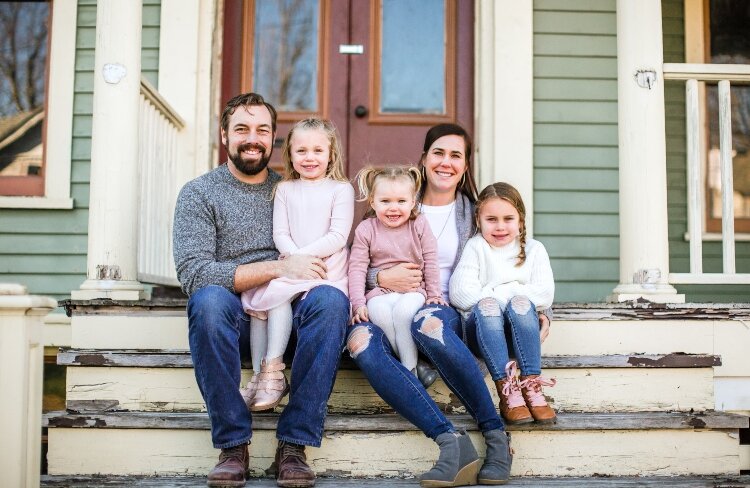
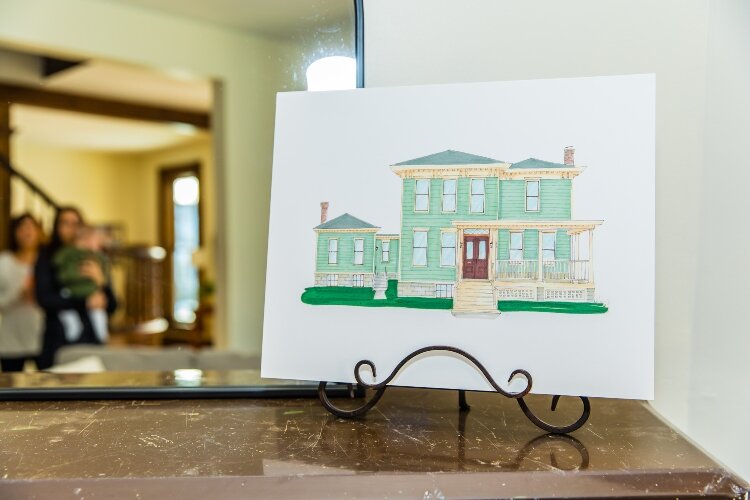
Last year, Wayne Hofmann, Client Funding Director of WadeTrim, who Route Bay City visited with in 2021, was in the process of renovating his family’s forever home on North Grant Street on Bay City’s East Side.
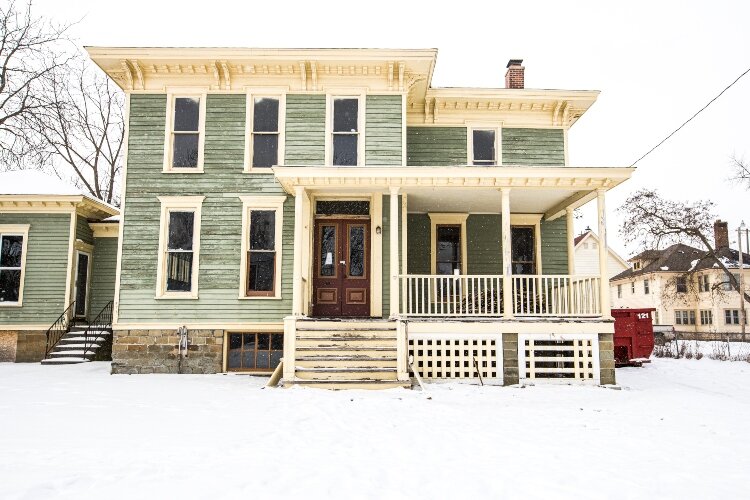
Just over a year later, Route returned to visit with the Hofmann family and find out what’s been happening. We found the Hofmanns officially home at 615 N. Grant St. The work isn’t completely finished, but it’s come a long way. And Hofmann is making big plans for the neighborhood.
Hofmann says it was nice to finally sit down in a completed home, as they had been living in St. Charles and commuting to Bay City for work, school, and renovations.
“Thirty-five miles drive each day, back and forth. It was quite a lot,” says Hofmann. “It’s been incredibly refreshing to finally be moved back to Bay City. St. Charles was great to our family, but the back and forth between working at the house and taking our kids to school at Kolb Elementary was really stressful.”
Since settling in, his family has been able to enjoy walking downtown or to the Johnson Street Business District.
The Hofmann family couldn’t be happier to finally be living inside the home.
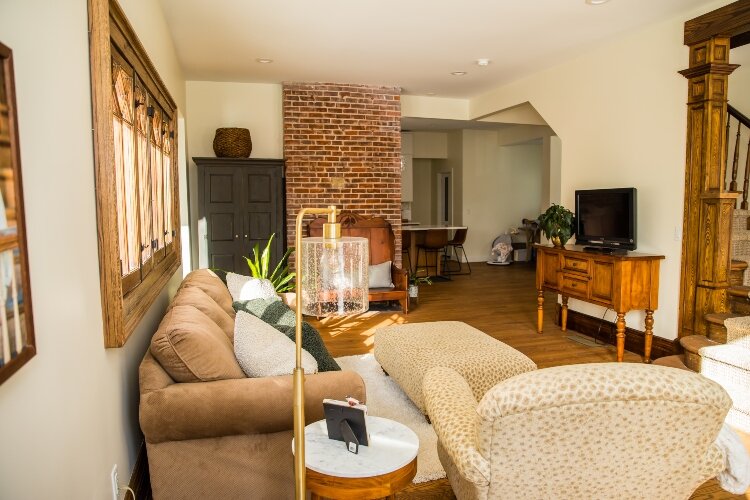
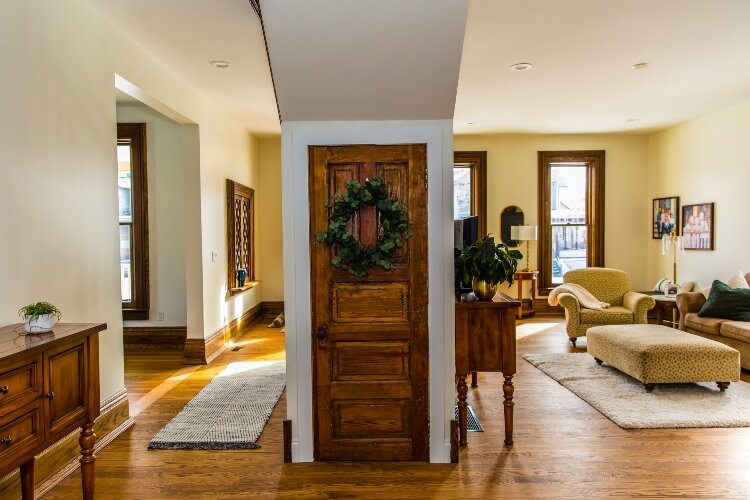
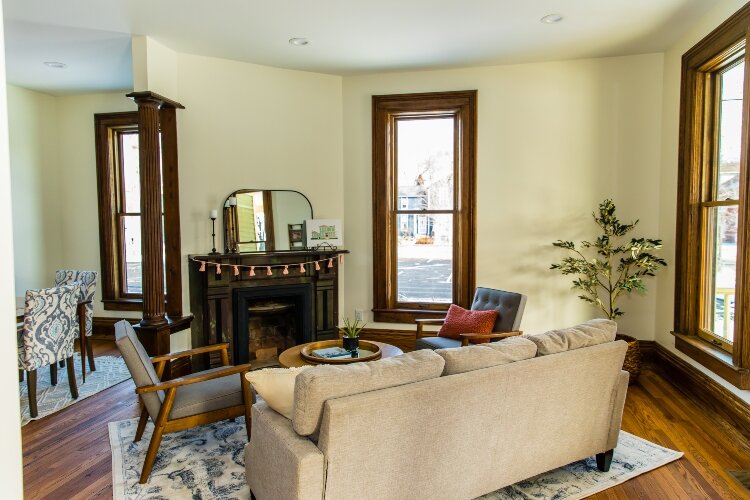
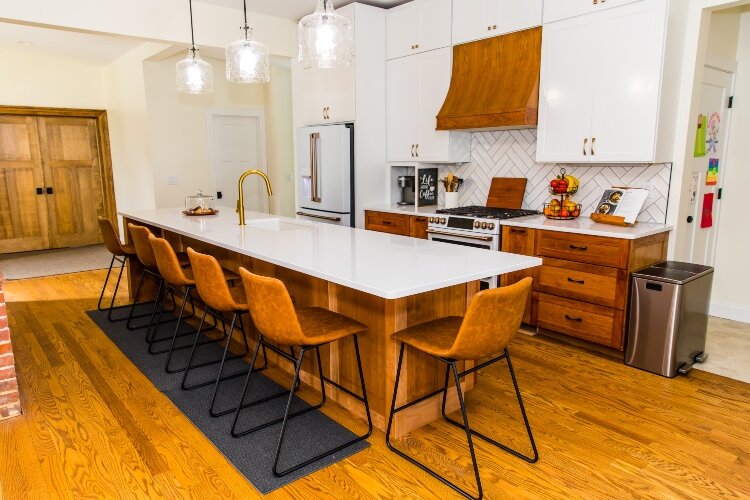
“The interior has been completely renovated, save for some very special historic elements,” says Hofmann.
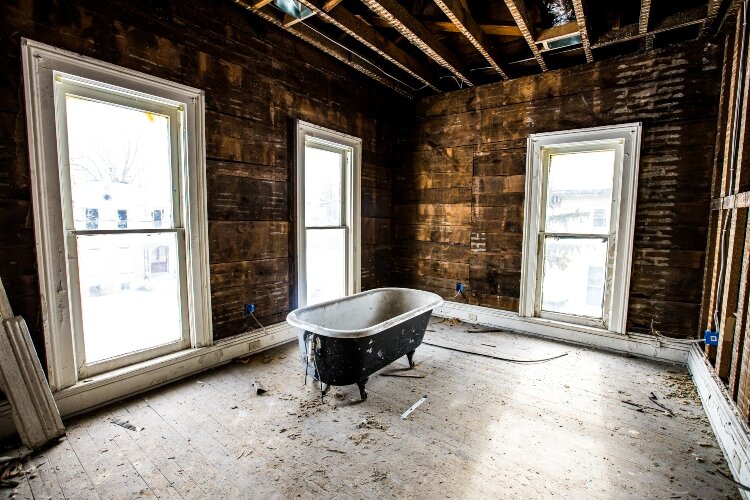
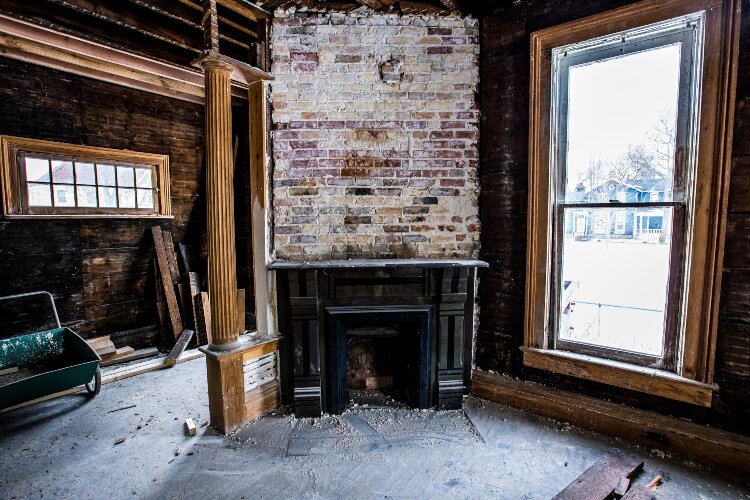
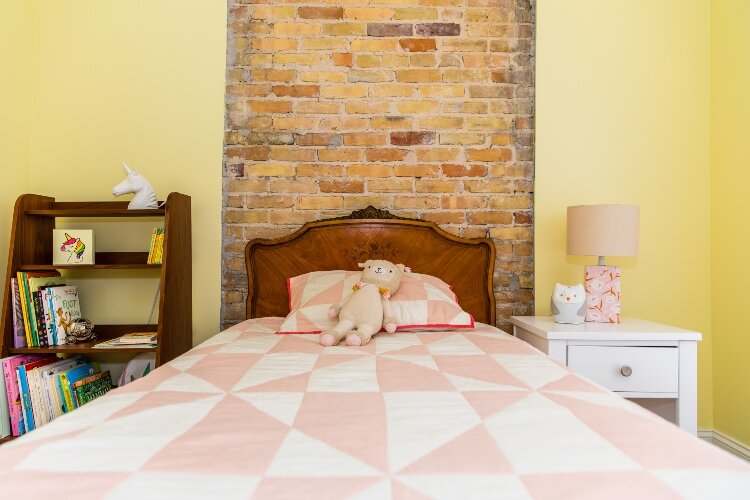
They focused first on the interior so they could move in. Before the Hofmann family bought the home, it was divided up into six apartments.
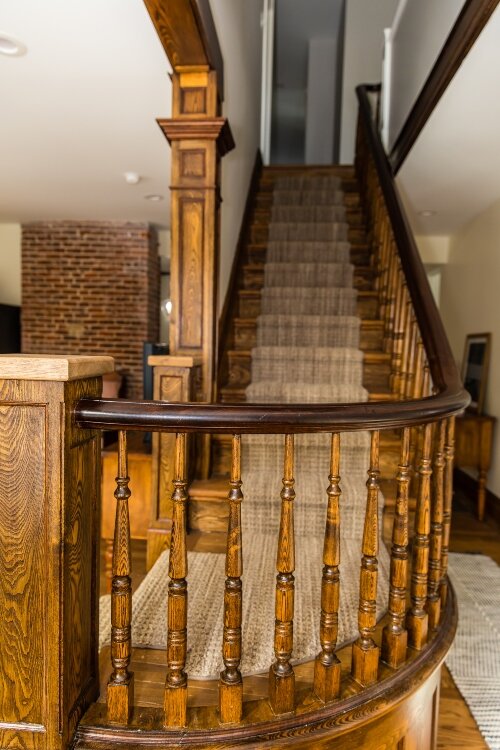
“The grand staircase was sanded meticulously and stained. The ‘Birdroom’ as we call it, was built in the late 1880s and was used for Newell Eddy’s ornithological collection. We kept the coffered ceiling and the existing wainscoting. Half of the wainscoting had been removed in the past and we plan to one day replicate that element.”
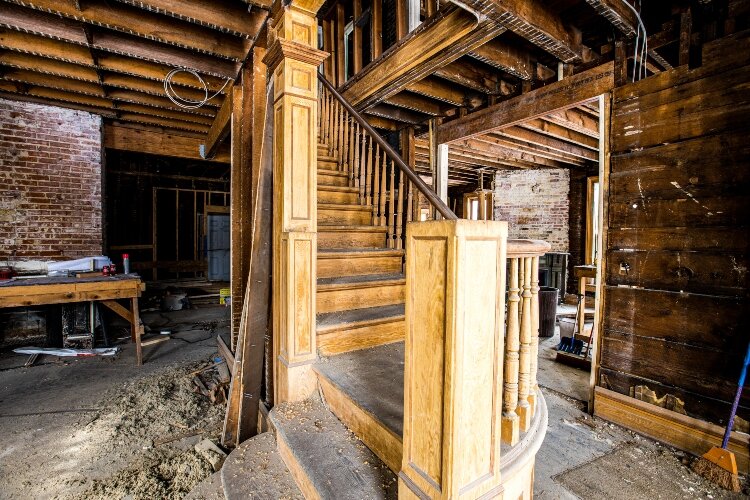
The first story of the home included the names of the Eddy children that were written at the turn of the 20th Century. Hofmann’s children wrote their names on the same wall before drywall was added.
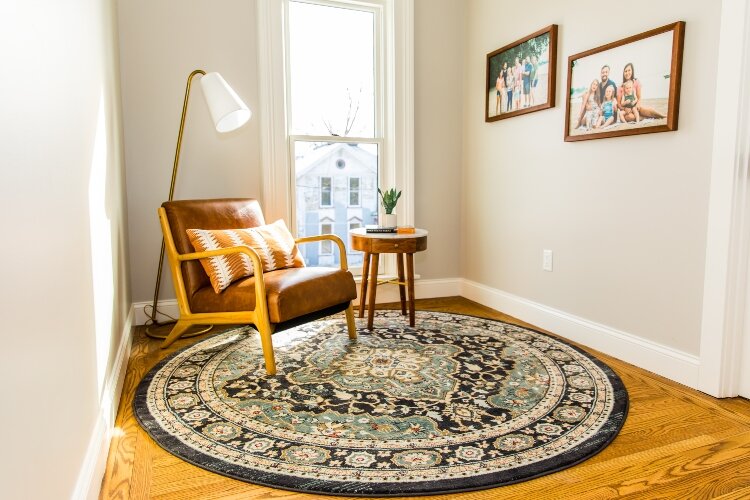
“Since we have four young girls, it was important that we made the house functionally modern, while keeping the strongest historic elements,” says Hofmann, adding he wanted to save as much of the original flooring as possible. However, many of the areas were too thin to have sanded and refinished.
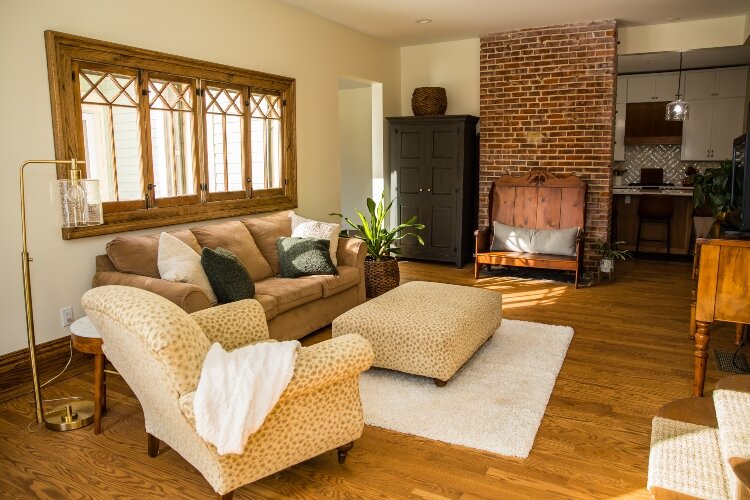
“Fortunately, we were able to do so in one of the first-floor parlors and the upstairs hallway. In areas we couldn’t save the floors, we replaced with new oak stained with Loba oil.”
To help with natural lighting, several walls on the main floor were removed and transoms were added above the bathroom and bedroom doors on the second floor to help light the hallways.
The kitchen had a few layers of old wooden flooring removed that had previously been covered with asbestos mastic. The original floor also contained an intricate wooden diamond pattern.
“Unfortunately, that floor was several layers lower than we needed to make a consistent plane with the other rooms. While we had to cover that, I plan to create an art piece of that pattern out of the old wood lath,” says Hofmann.
Throughout the home, the baseboards were a mix of styles from decades prior, some containing lead-based paint.
“We replaced it with a special 11-inch oak baseboard profile throughout the front parlor areas,” says Hofmann. “It was very expensive, but we felt that was an important element to add.”
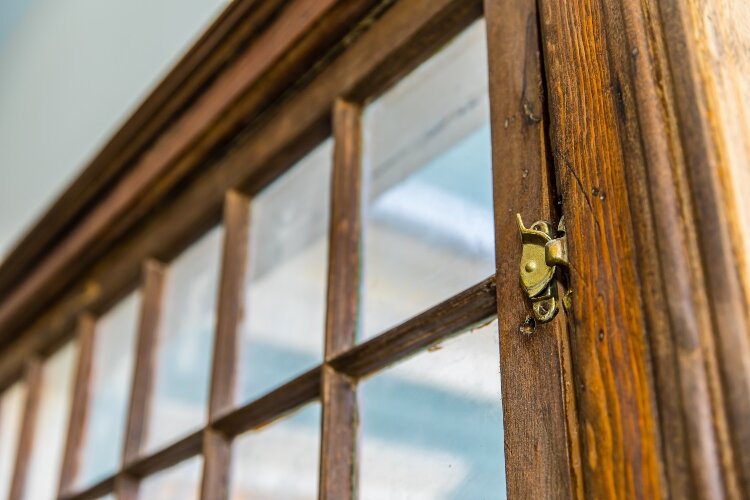
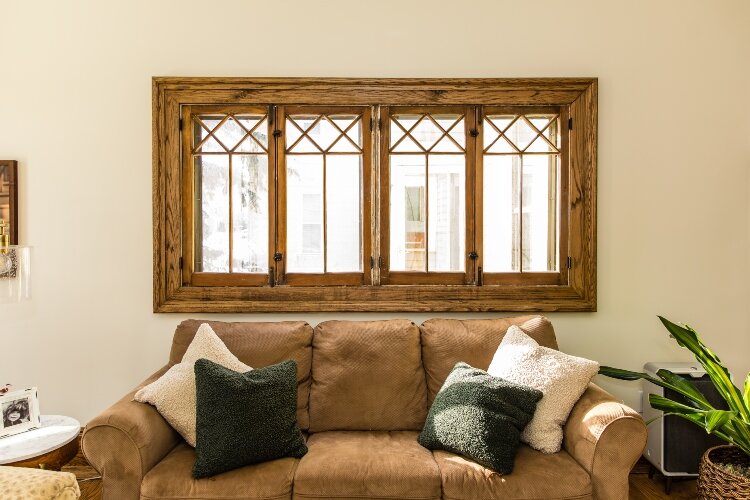
He replaced 35 windows and kept four ornamental windows. One of those was a large casement restored by Michigan Historic Window Company. Three original fireplaces are being kept, which Hofmann says adds a classic touch.
“I was able to salvage a great deal of old pine sheathing, wood lath, and lumber from where we removed the walls,” Hofmann says. “I’m looking forward to reusing it to make furniture and art pieces.”
For now, Hofmann plans to focus on renovating the exterior.
“The next step is getting it painted. Building a few things on the outside, finishing off the porch. Those things can wait, but you wait too long and then they don’t get done. So that’s our 2022 plan.”
He’s already done some work in the old carriage house, converting it into a garage.
“The garage was an old carriage house that had a wooden floor with rotting piers,” says Hofmann. “I tore out the old lumber floor and we filled it with concrete so we could use that as a garage.”
The second floor was also sagging 2 inches above the garage and needed to be jacked up to install a 24-foot steel beam.
“We will be scraping and painting this year and will be keeping the same color,” says Hofmann. “Some people think that color is reviewed by the historic commission, but that’s not actually the case.”
The paint, Hofmann says, was one of the first things his wife, Cadia, admired about the house.
Hofmann also intends to re-finish and re-paint the front porch.
“Our house faces the east, so I’m looking forward to sunny-side mornings sitting on the porch as I drink coffee.”
Throughout the last year, the family has faced challenges and experienced joys.
“We had somebody get COVID on site and shut our project down for a little while. Obviously, costs went up significantly, but we were able to bear through that,” he says. “It’s just a bear when you’re trying to do a house and not piecemeal it. I wanted to get it done because I didn’t want my four daughters living in a construction zone. We were pretty dedicated to getting it done.”
The joyful moments were sometimes unexpected. As work on the home progressed, it became usual to see cars stop and examine the exterior. One such driver struck up a conversation with Hofmann as he was outside in construction gear.
“I didn’t look like I was an owner. I look like I was a contractor and a guy stopped in the middle of street and was staring at the house – I’ve had that happen quite a bit. I walked over, and the guy was from Washington. He was Newell Eddy’s distant relative.
“If I wouldn’t have been working out in front, I would have never known that he was there. He was very interested in showing his kids were Newell Eddy lived and he had his young kids from Washington there. It was just neat to see. He’s like, ‘Oh, are you are you working on this house?’ I’m like, ‘Yeah, I’m the owner!’ He was like, ‘Oh my gosh, I wasn’t expecting to see you.’ We sparked up a good chat. We traded some emails.”
Even before the work on his family’s home is finished, Hofmann is beginning to think about the neighborhood.
“The next step is how do we impact this neighborhood in a positive way?”
Through American Rescue Plan (ARPA) funding and other resources, Hofmann hopes to create programs similar to what The Porch Project is doing in Flint.
This neighborhood, bounded by Van Buren, McKinley, Farragut, and Sixth streets, contains six vacant properties, including two vacant homes and four vacant lots.
“My vision for that is something goes there that’s productive and helps revitalize this area. Ideally, we’re renovating the two houses and building new homes on the vacant lots. It’s tough to get financing, it’s tough to put your life on hold and make that happen. It’s very tough to do that, even if you’re someone of moderate means,” he says, adding that through a Land Trust is one potential solution.
“They’re used in other markets to maintain permanent or almost permanent affordability. In this market, we need something a little different. We need a vehicle for these houses to get put back on the market or else they will just sit there and be demolished, which I think we’ve seen in Bay City and Saginaw happens way too much.”
Hofmann has also joined the board for Michigan Health Improvement Alliance (MiHIA).
“Through their THRIVE initiative, we are trying to impact the social determinants of health. One of the biggest is housing. Where you live matters,” says Hofmann. “The health of that environment, whether it has lead paint, whether it has asbestos, or lead in the water, and the condition the house is in, is really impactful not only on a personal health and public health and the health of the community. MiHIA is looking at ways to be impactful on the housing side as well. That’s why I joined the board.”
In the last year, he has seen positive changes.
“A very cool 18-unit apartment just started a full renovation just two houses north of our home and several homes along Sixth Street have been renovated in recent years. With the proximity to downtown, this area is poised to thrive,” Hofmann says.
Hofmann adds he has had good discussions with city and county officials about the possibilities and would like to assist people in the neighborhood to access resources aimed at improving porches, exteriors, and weatherizing homes.
“I hope this gives us a strong idea of what would be helpful to people in the neighborhood, and that the city utilizes its American Rescue Plan Act funding to support the acting on recommendations in previous housing studies,” says Hofmann. “I think the American Rescue Plan Act brings a lot of opportunity for Bay City and Saginaw and trying to advocate for investment in solving some of these housing problems through that.”
To see more of the Hofmann’s progress on their home, check out Instagram.
Related Articles

A sure sign of Spring – Easter egg hunts and butterflies
From Easter egg hunts and bunny photo ops to brunch buffets and butterflies in bloom, early April is packed with family-friendly events across the Great Lakes Bay Region.
New chapter begins for the Grace A. Dow Memorial Library during open house week
Final preparations are underway for the much-anticipated unveiling of new and improved spaces within the Grace A. Dow Memorial Library in Midland.
New piercer joins Brass Cat Tattoo in Midland
Maggie Davis, of Piercing by Maggie, brings expanded body art services to the Ashman Circle studio


