
Beyond the uniform: How Midland Youth connect with First Responders
Midland’s schools and community events are creating opportunities for young people to build trust and familiarity with first responders long before an emergency brings them together.
A sixth grader standing beside a police cruiser may be fascinated by the lights. Another might want to know what is inside an ambulance. Someone else may be more interested in the firefighter explaining the science behind the equipment. What looks like a fun break from the regular school day can become something much more important.
Across Midland, young people have opportunities to meet police officers, firefighters, deputies, paramedics and other public safety professionals in places where no emergency is unfolding. They meet in school hallways and at community events. They learn from them during hands-on programs and sometimes discover that the person wearing the uniform has a sense of humor, remembers their name or simply takes the time to listen. Those interactions matter.
During the Spring semester at Northeast Middle School, students got an up-close look at the connection between science and public safety during First Responders Day. The event was organized by the school’s Chief Science Officers and gave sixth graders the chance to rotate through stations featuring professionals who use science, technology, engineering and math in their work.
For the students who organized the event, the goal was to make STEM feel relevant. “We really want to show them that STEM is used in a lot of different professions, even professions you might not have immediately thought,” says then-eighth grader Theadora von Matt. “We have police officers here that use STEM every day.”
The event also puts students face to face with the people behind those professions. Instead of encountering an ambulance because someone is hurt, they can explore one because they are curious. A police officer becomes someone they can ask questions. Firefighters can explain their equipment without smoke, flames or fear surrounding the conversation. That difference is significant.
Hayden Pfeiffer, another student organizer, says one of her favorite parts is watching younger students become interested in what they are seeing. “It’s just cool how they can connect STEM to these jobs,” she says.
The Chief Science Officers are learning alongside them. Planning the event required students to communicate with professionals, coordinate logistics and work through unexpected challenges. Pfeiffer says the experience has helped her learn how to write emails, speak with STEM professionals and address groups of students.
Ellie Pnacek says she has noticed a change in herself too. “Before this I was, I think, way quieter,” she says. “But now I feel that I can speak up more.”
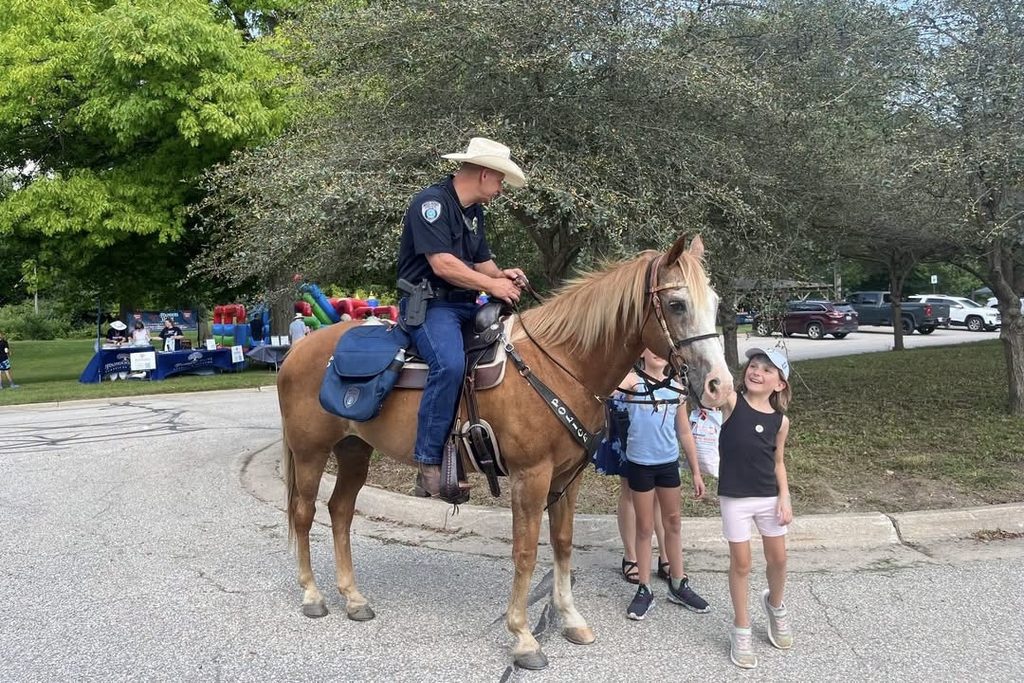
Some relationships between young people and first responders have an opportunity to develop over a much longer period. School Resource Officers become part of the everyday rhythm of a school. Students see them between classes, at sporting events and during ordinary moments that have little to do with law enforcement. Midland Police Department Deputy Chief Jai Mahabir has experienced firsthand how meaningful those moments can become. “The School Resource Officer program is about so much more than a badge in the hallway,” Mahabir shares. “It is about building trust, creating connections, and being there for students during some of the most important years of their lives.”
The conversations that happen between classes may never be reported. Neither will the laughs, high fives or words of encouragement at a game. Yet those seemingly small interactions can shape how a young person views law enforcement long before they ever need an officer’s help. “Those moments may seem small, but they often make the biggest difference,” Mahabir continues.
For teenagers interested in taking a deeper look at public safety, the Midland Youth Law Enforcement Academy offers another opportunity. The academy introduces teens to the realities of careers throughout the criminal justice system. Participants learn about traditional police work along with specialized law enforcement roles, corrections and the court system. The experience helps young people understand that keeping a community safe involves many people with different responsibilities.
Meridian School Resource Officer and Midland County Sheriff’s Office Deputy Jodye Streeter sees another benefit in what happens to the teens themselves. The program builds confidence through encouragement from School Resource Officers, instructors and fellow participants. It also creates friendships and positive connections that can continue after the academy ends.
“Our strong motivation is also seeing the friendships and positive connections built within our community,” Streeter says. “Giving back to our youth will help foster better relationships for many generations to come.”
Not every interaction needs to happen through a structured educational program. Sometimes building trust looks more like a summer evening at Emerson Park. National Night Out gives families a chance to meet many of the people responsible for public safety throughout Midland County. This year’s event brought together the Midland Police Department, Midland Fire Department, Midland County Sheriff’s Office, MyMichigan EMS, Michigan State Police, Midland SWAT, the Army National Guard and other agencies.
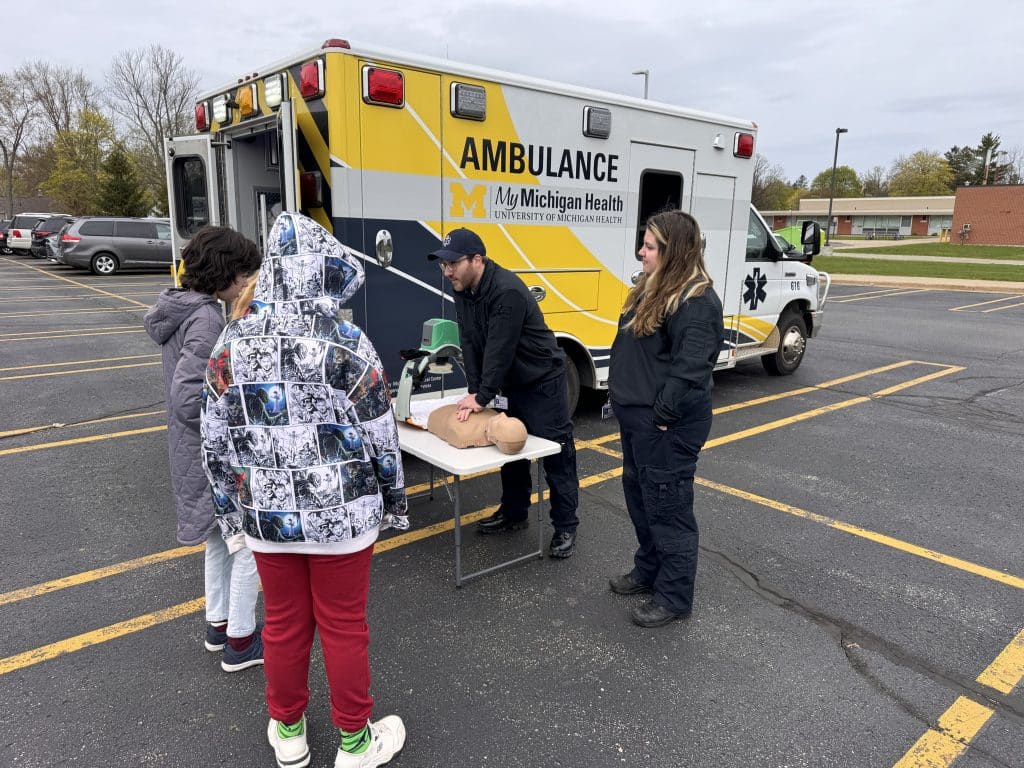
Children could explore emergency vehicles, get their faces painted and bounce their way through inflatable attractions. Families could ask questions or talk with first responders without being hurried by an emergency.
They could even dunk the chief of police in a dunk tank. There is value in that kind of silliness. A child who sees a police chief laughing after falling into a tank of water is seeing something beyond a title or uniform. The firefighter standing beside a truck becomes a neighbor. The paramedic answering a child’s questions becomes someone familiar. The deputy talking with a family becomes a person rather than an authority figure viewed only from a distance.
Positive relationships with first responders do not have to begin when something has gone wrong. In fact, there is good reason for them to begin much earlier. A young person who has already talked with an officer at school may feel more comfortable approaching one when they need help. A child who has climbed through a fire truck at a community event may be less frightened by the firefighter who arrives during an emergency. A teenager who spends time learning alongside deputies may begin to see public service as a career worth considering.
There is another side to those relationships as well. First responders get to know the young people they serve outside of calls for service. They hear their questions, learn what interests them and have opportunities to encourage them. That familiarity helps turn the idea of “community” into actual relationships.
For some students, an experience like First Responders Day may spark an interest in engineering, medicine or public safety. For others, the Youth Law Enforcement Academy could be the first time they picture themselves wearing a uniform. A conversation with an SRO may help a student through a difficult day. A child at National Night Out may simply go home thinking the firefighter they met was a nice person. None of those moments must be dramatic to matter.
Trust is often built quietly. It grows in school hallways, beside fire trucks and over conversations between people who might otherwise never have the chance to know one another. When Midland’s young people are given opportunities to meet first responders before they need them in an emergency, the uniform becomes connected to a familiar face.
And years from now, that may be the interaction they remember.
Author

Related Articles
Dow Foundation commits additional $4 million to Midland Center for the Arts campaign
The Herbert H. and Grace A. Dow Foundation has committed an additional $4 million to Midland Center for the Arts’ capital campaign, bringing its total commitment to $9 million.
Not your average classroom: A front-row seat to public safety in Bay City
The Bay City Department of Public Safety’s Citizen’s Public Safety Academy offers residents hands-on experiences and a behind-the-scenes look at local first responders.
The seasons are changing, but farmers market days aren’t over yet
As summer gives way to fall, farmers markets across the Great Lakes Bay Region are still going strong, offering fresh produce and local goods before the season winds down.


