A simple envelope, a stronger connection: Midland Police launch Blue Envelope Program
The Midland Police Department is introducing a new initiative designed to make interactions with law enforcement safer, less stressful and more inclusive for individuals with disabilities and communication challenges.
For most drivers, seeing flashing lights in the rearview mirror is enough to make their heart skip a beat. Now imagine navigating that same experience while struggling to process verbal instructions, maintain eye contact or communicate under pressure. For individuals with autism, anxiety, hearing loss or other communication challenges, an otherwise routine traffic stop can quickly become overwhelming.
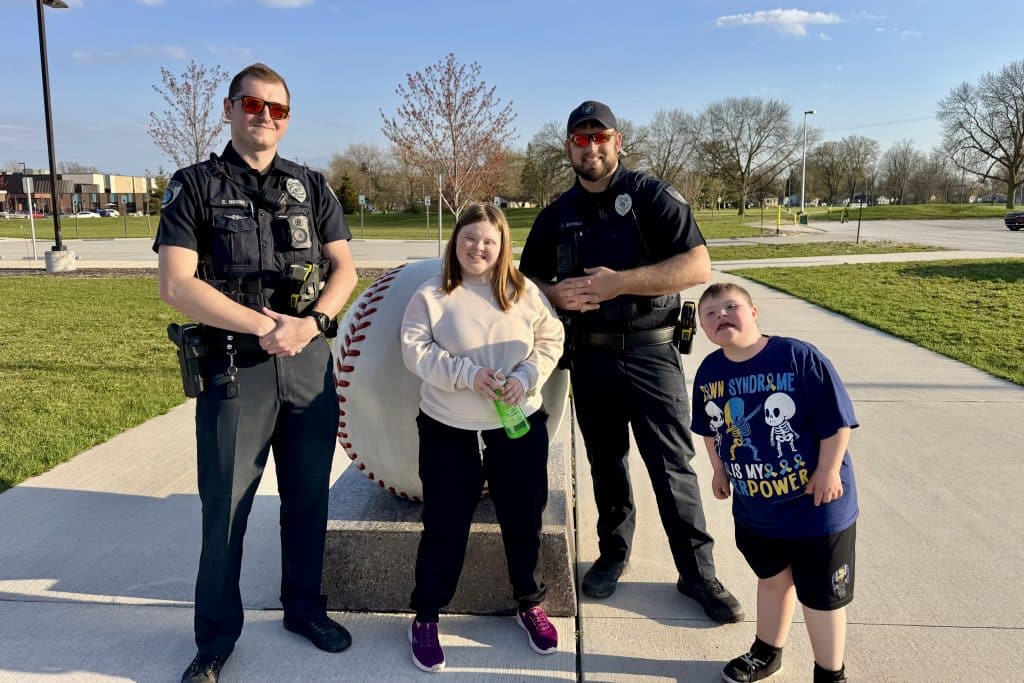
The Midland Police Department hopes to change that with the launch of its Blue Envelope Program, a voluntary initiative designed to help officers and community members better understand one another before a simple misunderstanding becomes something more.
The concept is straightforward. Participants receive a blue envelope containing a form that identifies important communication needs, preferred methods of interaction and emergency contact information. The envelope can also hold a driver’s license, registration and proof of insurance. During a traffic stop, the driver presents the envelope to the officer, providing valuable information that might otherwise be difficult to communicate.
Community Relations Officer Gunner Wright explains that the information is designed to be accessible without unnecessarily delaying an interaction.
“There’s only so much that we can do as far as accommodations, but this is a great start to opening up those interactions and having them be less confusing,” says Wright.
An officer can review the information alongside the driver’s paperwork and return to the vehicle with a better understanding of how to communicate effectively.
What makes Midland’s approach particularly meaningful is its emphasis on inclusion. While similar programs originated to assist individuals with autism spectrum disorder, Midland’s version is intended to accommodate a much broader range of needs.
Chief Nicole Ford explains that behaviors commonly interpreted as unwillingness to cooperate may actually reflect a communication difference. “When people think simple things like people aren’t making eye contact or they’re refusing to answer, that can be viewed often as the lack of desire to cooperate,” says Ford. “And what it really is is sometimes it’s just a misunderstanding regarding each other’s communication status.”
The envelope’s accompanying form allows participants to identify whether they communicate verbally or nonverbally, prefer written instructions or benefit from another form of assistance. Participants also receive a sticker featuring a gold infinity symbol, providing an additional visual cue for officers trained to recognize it.
Wright says the initiative builds upon the department’s existing training and relationships with individuals with disabilities.
“If I see this sticker, I see this blue envelope. I’m going to revert back to my training on how to handle these types of individuals with respect and the challenge that maybe presents itself on that stop.”
For Wright, the program also carries personal significance. His 27-year-old brother-in-law has autism, giving him firsthand experience with the challenges individuals and families can encounter in everyday situations.
“It’s just one more step to ensure the safety of some really good people that have some really big challenges,” he shares.
The program grew from conversations between Ford and Iris Mehler, co-executive director of 1in6 Support Group, a Midland nonprofit providing support, resources and advocacy for families of children with disabilities, communities and organizations.
Mehler has also participated in discussions about bringing the Blue Envelope concept to Michigan through the Michigan Developmental Disabilities Council’s Public Policy Committee. She believes Midland’s willingness to embrace the initiative presents an opportunity for other communities to learn from its implementation.
“Sometimes we all judge other people if they behave in unexpected ways, and we are trying through the blue envelope to reduce that stress level and to help everybody kind of find common ground,” Mehler explains.
Ford’s connection to the disability community extends beyond her professional responsibilities. Her daughter is a special education teacher, exposing Ford to experiences and perspectives she might not otherwise encounter as police chief.
“I want to make sure that all of our citizens feel served by the Midland Police Department. And this is just one more way we get to do this,” Ford shares.
Rather than waiting for statewide legislation or requirements, Ford believes meaningful improvements can begin at the local level.
“I don’t like to wait for laws and mandates to come down for us to make changes. If we find a need, we find a space, we find a gap. We want to be proactive.”
Mehler hopes Midland’s early adoption will demonstrate how a relatively simple tool can strengthen relationships between law enforcement and individuals who may have previously felt misunderstood.
“I find it to be so heartwarming, and I really admire this initiative, and I think it’s beautiful,” she says.

Although the Blue Envelope Program is primarily associated with driving, Midland’s initiative reaches beyond the roadside.
Parents and caregivers can use an envelope to communicate information about a passenger who may become overwhelmed during an emergency. A family member with autism, for example, might react unexpectedly to flashing lights, unfamiliar voices or sudden changes in routine.
The department also offers an entirely voluntary option for residents to share important response information associated with their home address through Midland County Central Dispatch’s computer-aided dispatch system.
This information could alert responding personnel to sensory sensitivities, communication needs, medical concerns or helpful emergency contacts before they arrive. The address-based alert does not identify a specific household member by name.
Ford believes this broader approach can make an important difference for families. “If we have the information, we can just serve our community better,” she explains.
Mehler agrees, particularly for families who may struggle to explain complex needs during an already stressful situation.
“If we have one individual that through this blue envelope program has a better interaction with the police, that’s a success because every single incident like that can have such a dramatic effect on someone’s life, and maybe even their independence,” she says.
The Midland County Sheriff’s Office has launched its own separate communication-support initiative, offering another resource for individuals and families throughout Midland County.
While the city and county programs operate independently, they share a common purpose: helping first responders approach interactions with greater awareness, understanding and compassion.
Participation is not restricted by whether someone lives within Midland’s city limits. Individuals who live in the county but regularly travel into the city are welcome to participate in the Midland Police Department’s program, the Sheriff’s Office initiative or both.
Wright emphasizes that the goal isn’t to promote one agency’s program over another.
“These both serve a purpose, and whatever you want to do, you are welcome to do it,” he says.
That cooperative approach reflects the positive working relationship between the city’s police department and the county’s sheriff’s office. Rather than allowing jurisdictional boundaries to become barriers, both agencies recognize the value of providing families with resources that can help wherever an interaction occurs.
The Blue Envelope Program complements Midland Police Department’s ongoing involvement with Special Olympics, Miracle Field and other organizations serving individuals with disabilities.
Mehler points to the department’s participation in community events, including the Abilities Parade, as examples of how positive interactions can help individuals become more comfortable around law enforcement.
She also hopes the department will eventually offer opportunities for individuals with disabilities to practice traffic stops in a controlled, supportive environment.
Ford shares that enthusiasm, recognizing that education benefits both officers and community members.
“I think any time that we have a space where we can educate each other, we’re all going to come out better for it,” she says.
Ultimately, the department hopes to measure success through meaningful interactions rather than the number of envelopes distributed. For Ford, hearing that an officer handled a challenging situation differently because of the program, or seeing someone who once feared law enforcement approach an officer with confidence, would be far more valuable than any statistic.
Individuals and families interested in participating can obtain a free Blue Envelope through the Midland Police Department at Midland County Central Dispatch or from school resource officers at participating schools. The envelope and its information remain with the participant, and sharing information for a residential dispatch alert is entirely voluntary.
For individuals who have spent years worrying about how a loved one might respond during an emergency, the Blue Envelope Program offers something especially valuable: a little more peace of mind.
Sometimes, building a stronger relationship between law enforcement and the community doesn’t require a sweeping change. Sometimes, it starts with a conversation, a willingness to understand and one simple blue envelope.
Author

Related Articles

A new leash on law enforcement: K-9 Mando joins Midland County
Deputy Zack Ferrier and K9 Mando are reunited and ready to serve Midland County. With specialized training, a playful personality and a strong bond, this four-legged deputy is bringing a little something extra to public safet
Not your average classroom: A front-row seat to public safety in Bay City
The Bay City Department of Public Safety’s Citizen’s Public Safety Academy offers residents hands-on experiences and a behind-the-scenes look at local first responders.

City of Midland Retains Class 5 Community Rating System from FEMA
Midland’s continued flood mitigation efforts have secured the highest FEMA Community Rating System designation in Michigan, preserving a 25 percent flood insurance discount for most policyholders.