
SVSU Police welcome students back for a new year
SVSU Campus Police is welcoming students back by building relationships early, offering safety education, and reminding students that officers are there as a resource when they need help.
For thousands of Saginaw Valley State University students, this week marks a transition. Cars packed with bedding, mini refrigerators and boxes are arriving on campus as students settle into residence halls and prepare for classes to begin Aug. 31. For some, it is a familiar routine. For others, it is the first time they have lived away from home.
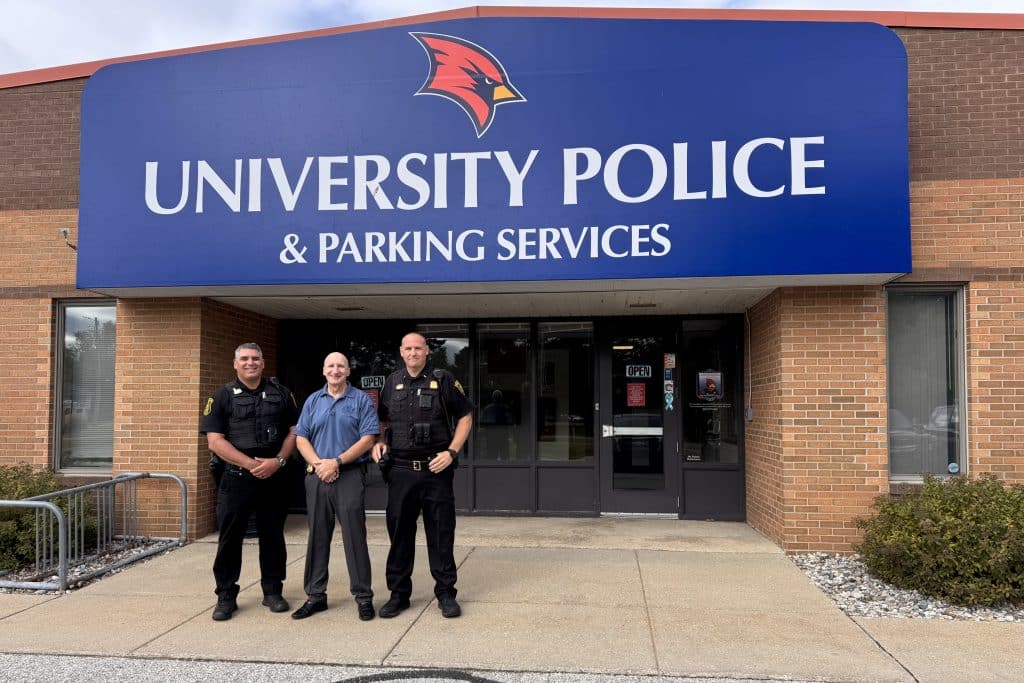
As students navigate new roommates, new schedules and a new sense of independence, SVSU Campus Police Lieutenant Chad Lackowski and Detective Ryan Persails want them to know something from the beginning: campus police are there to help.
“We try to let them know that we’re here for them and not here to try and get them in trouble,” Persails says. “Basically, we’re here to keep them safe.”
That message becomes especially important with incoming freshmen. Some students may have had little interaction with law enforcement before arriving at college, making relationship building an important part of the department’s work.
For campus police, preparation for the fall semester begins well before the first class. Move-in days bring an increased police presence as officers help welcome students and make themselves visible throughout campus. Officers also participate in university programs including Student Orientation, Advising and Registration, known as SOAR, as well as Fresh Start and activities throughout the academic year.
“We just try to be really visible and welcoming for our students,” Lackowski says.
That visibility is intentional. Officers would rather have a student’s first interaction with them happen during an orientation program, residence hall event or casual conversation than during a crisis.
Throughout the year, officers participate in programs organized by resident assistants and resident directors. Sometimes that means answering safety questions. Other times, it might mean joining students for something as simple as a video game night. “It’s just about being around and letting people talk to us and get to know us,” Lackowski shares.
Those relationships can become particularly important during the first weeks of school, when new students are learning more than where their classrooms are located.
Some of the safety reminders are simple. SVSU has plenty of stop signs, Persails notes, and students unfamiliar with campus sometimes miss them. Pedestrians also need to pay attention when crossing streets instead of looking down at their phones.
Other lessons come with learning to balance a welcoming college environment with personal safety. Residence halls naturally encourage students to meet their neighbors, leave their rooms and build friendships. Lackowski says that sense of community is important, but students should not become so comfortable that they forget basic precautions.
Lock residence hall doors. Lock vehicles. Keep track of personal belongings. Pay attention to surroundings. New students, he explains, can sometimes be very trusting. “You’re trying to create a community where all the kids get to know each other,” Lackowski says. “But you’ve still got to have some safety and know your surroundings.”
Safety on a college campus also extends beyond locked doors and traffic rules. For some students, college brings their first experience with living independently. There can be excitement in that freedom, but there can also be homesickness, financial difficulties, mental health concerns and decisions surrounding alcohol. Campus police recognize that those situations cannot always be addressed with enforcement alone.
SVSU offers resources for students facing a variety of challenges, and Lackowski encourages them to ask for help even when they are not sure where to begin. Campus police are available 24 hours a day, seven days a week and can help connect students with the appropriate university resources.
“If you’ve got any type of problem, we’ll help you get to an answer,” Lackowski says. “Whether it’s something we can help with or your refrigerator’s broken, come to us. We can get you to the right people.”
The department also offers educational opportunities throughout the year. Persails provides Avoid, Deny, Defend training for students, faculty and staff, while other campus programming includes Narcan training. Officers also speak with fraternities, clubs and other student organizations about alcohol, safety and related topics.
When officers encounter underage drinking or similar situations, Persails says they have discretion depending on the circumstances. A student could receive a citation, but education, warnings and the university’s student conduct process can also play a role. “We offer education classes all the time,” Persails says. “Fraternities or different groups or clubs on campus will ask us to do safety talks, alcohol talks. We’ll talk with them.”
The department’s emphasis on discretion does not mean ignoring dangerous behavior. Instead, officers consider the circumstances while keeping student safety at the center of their response. Perhaps nowhere is that more important than when alcohol consumption becomes a medical concern. Lackowski says students should never avoid calling the police because they are afraid they will get in trouble themselves. If a roommate or friend is extremely intoxicated, vomiting or otherwise in danger, getting help should be the priority. “Their safety is more important than writing some ticket,” Lackowski says.
For parents, sending a student to college can bring a different adjustment. Campus police interact with parents during orientation and introduce them to resources available through the university. At the same time, Lackowski says families sometimes encounter a difficult reality when they call looking for information about their students. College students are adults, and privacy laws can restrict what information university personnel can provide to parents, even when a parent is understandably worried. It is another reminder that the beginning of college represents a significant transition for the entire family.
SVSU Campus Police operates as its own law enforcement agency within its jurisdictional boundaries. Officers are also deputized through Saginaw County, allowing them to enforce laws within the county through the authority of the Saginaw County Sheriff’s Office.
But for the students arriving with overloaded vehicles, nervous parents and plenty of questions, the technical details of jurisdiction are probably less important than knowing there is someone available when they need help. For Persails, that means making sure new students understand from their first days on campus that talking with an officer does not automatically mean they are in trouble. For Lackowski, it can be as simple as answering a question, pointing someone in the right direction or being a familiar face the next time that student sees an officer walking across campus.
As SVSU welcomes students back, the university is also preparing to say goodbye to a longtime member of its campus community. Campus Police Chief Cliff Block retires this week, with his final day on Aug. 29. His years of service have contributed to the safety and well-being of SVSU and the surrounding community. Thank you, Chief Block, for your service to the university and community. Best wishes in retirement.
For the officers remaining on campus, another year brings another group of students to meet, another round of orientations and another opportunity to build relationships before an emergency ever happens. And for the freshmen arriving nervous, excited and perhaps a little unsure of what comes next, Lackowski’s message is uncomplicated: do not be afraid to ask for help.
Campus police are there.
Author

Related Articles

The seasons are changing, but farmers market days aren’t over yet
As summer gives way to fall, farmers markets across the Great Lakes Bay Region are still going strong, offering fresh produce and local goods before the season winds down.

The Farm Bill, SNAP, and the childcare connection
SNAP helps families meet all basic needs, including childcare.


